
Kathmandu, August 28: Congress leader and Lok Sabha MP Shashi Tharoor, who is currently in Kathmandu, has stepped up his engagement with Nepalese authorities amid the devastating flash floods that have affected parts of the country, with particular concern over the safety and whereabouts of Indian nationals caught in the disaster.
The severe flash floods in northern Nepal have caused widespread destruction and left hundreds of people dead and thousands missing. Among those reported missing are a large number of Indian nationals, including pilgrims travelling in connection with the Kailash Mansarovar Yatra. Nepal’s Foreign Minister Shishir Khanal said that nearly 300 Indians were among those reported missing.
Against this backdrop, Tharoor has been engaging with senior Nepalese authorities and officials to remain informed about the situation and issues concerning the safety, rescue and possible evacuation of Indian citizens affected by the floods.
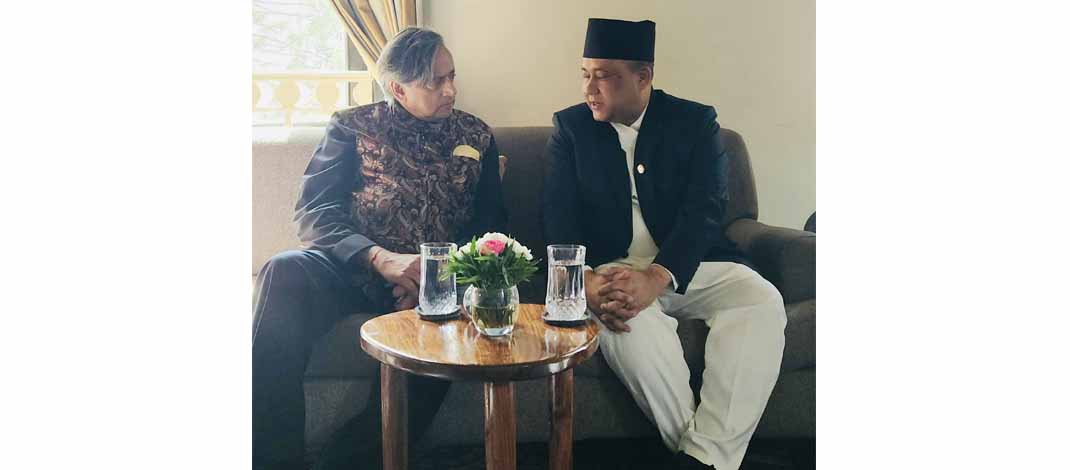
On the sidelines of the NDTV World Anviksha event in Kathmandu, Tharoor held a meeting with Nepal’s Foreign Minister Shishir Khanal. Sharing details of the interaction, Tharoor said he had a “good meeting” with Khanal and appreciated his background in leading Teach For Nepal, as well as his “pleasant and effective communication style”.
“A pleasure exchanging thoughts with him,” Tharoor said.
The meeting assumed added significance as Nepal continues to deal with the aftermath of the catastrophic flash floods. Tharoor has also expressed support for India’s prompt humanitarian assistance to Nepal and stressed that India should do whatever Nepal needs at this difficult moment.
At the same time, the Congress MP has highlighted the importance of handling India’s assistance with sensitivity and respect for Nepal’s sovereignty, cautioning against any perception of using humanitarian assistance for political or media publicity.
Focus on Indian Citizens
With hundreds of Indians reported missing or stranded following the floods, the safety of Indian nationals has emerged as a key concern.
The Ministry of External Affairs (MEA) has established a special control room to monitor the situation and is coordinating with Nepalese authorities. India has also initiated humanitarian assistance and evacuation-related efforts as the rescue operation continues.
Tharoor’s interactions with Nepalese officials in Kathmandu therefore come at a particularly sensitive time, providing an opportunity to exchange information on the situation of Indian citizens and reinforce the importance of close India-Nepal coordination during the ongoing humanitarian crisis.
The devastating floods, triggered by a major glacial and debris-related event in the Himalayan region, have severely damaged roads, bridges, settlements and other infrastructure, complicating rescue operations.
The developments have also underscored the importance of close coordination between Indian and Nepalese authorities, particularly for locating missing Indian nationals, ensuring their safety, facilitating communication with their families and supporting evacuation and relief efforts wherever required.
The broader message from Tharoor’s engagement in Kathmandu is clear: at a time of a major humanitarian crisis in Nepal, the immediate priority is the safety of people—and particularly the Indian nationals affected by the disaster—while strengthening the traditionally close ties between the two neighbouring countries.