
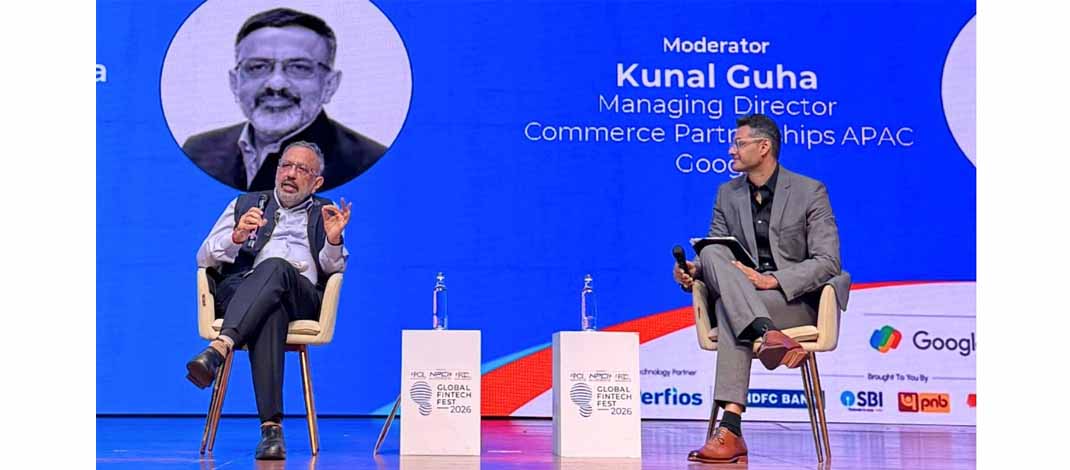
MUMBAI : Rajiv Gauba, Member, NITI Aayog, participated in a fireside chat on ‘From Regulation to Transformation: Building India’s Next-Generation Reform Architecture’ at the Global Fintech Fest 2026, where he discussed India’s reform journey, fintech regulation and the institutional changes required to sustain long-term economic growth.
Gauba said India’s next-generation reform architecture should be driven by deregulation, with greater emphasis on “nuts-and-bolts” reforms. He called for moving away from the traditional license–approval–permission and frequent renewal regime that exists in different forms across various sectors.
He stressed the need for a systematic review of laws, regulations and administrative processes to simplify governance and create a more conducive environment for growth. According to Gauba, this exercise is being undertaken by a High-Level Committee, guided by the philosophy of Trust-Based Governance advocated by Prime Minister Narendra Modi.
Speaking about the fintech sector, Gauba highlighted India’s phenomenal growth in financial technology and its contribution to expanding financial inclusion and access to financial services.
He cited India’s Digital Public Infrastructure (DPI), including Aadhaar, UPI, DigiLocker and the Account Aggregator framework, as a model that other countries can replicate. He explained that the approach involves governments providing open, secure and interoperable digital rails, enabling private enterprises to build innovative products and services on top of them.
On regulation of technology-driven sectors, Gauba said regulatory frameworks must maintain a dynamic balance between protecting public interest and allowing innovation to flourish. He called for regulations that are principles-based, technology-neutral and proportionate to risk.
He also emphasised the importance of promoting competition, ensuring non-discriminatory access to underlying infrastructure and improving information symmetry across the financial and technology ecosystem.
Concluding his remarks, Gauba said reform must become an integral part of the culture of governance, backed by long-term and strategic thinking. He added that Prime Minister Narendra Modi’s vision of Viksit Bharat by 2047 should be treated as a national enterprise, with government, industry and citizens each having an important role in sustaining India’s reform and growth momentum.