
NEW DELHI: The Directorate of Revenue Intelligence (DRI) has intensified its intelligence-led crackdown on the illegal trafficking of protected wildlife and wildlife derivatives, conducting six major operations across different locations in the country over the last 10 days.
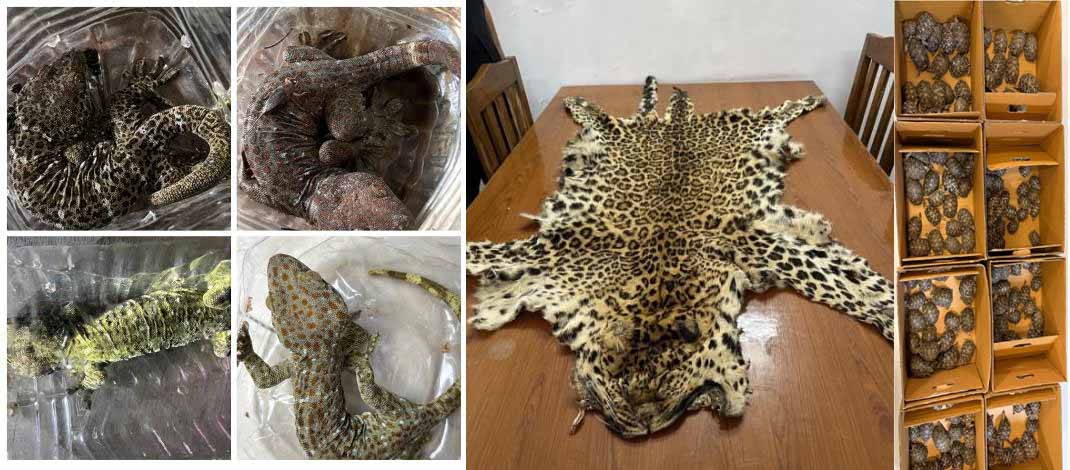
The operations resulted in the seizure of two leopard pelts, 180 live Indian Star Tortoises, 12 live Tokay Geckos, around 24 kg of Pangolin scales and 500 grams of Tiger bones. A total of 13 persons were arrested in connection with the six operations.
In an intelligence-led operation on September 7, 2026, DRI officers in Jeypore, Koraput district, Odisha, intercepted a person and recovered one leopard pelt from his possession. Leopards are protected under Schedule I of the Wildlife (Protection) Act, 1972, under which the trade, sale, purchase, possession or transportation of their pelts or body parts is prohibited. The pelt and the apprehended person were handed over to the State Forest Department, Koraput, for further investigation and legal action.
On the same day, DRI officers conducted another operation near Gandhinagar, Bengaluru, where examination of a person’s baggage led to the recovery of 180 live Indian Star Tortoises concealed inside six cloth covers. The Wildlife Crime Control Bureau (WCCB) identified the species as Geochelone elegans, which is listed under Schedule I of the Wildlife (Protection) Act, 1972. The tortoises were seized under the Act and the accused was arrested.
The Indian Star Tortoise is particularly targeted by illegal wildlife traffickers because of its distinctive star-patterned shell, which has made the species sought after in exotic pet and wildlife-collector markets.
Also on September 7, DRI officers intercepted a Bolero truck in Ri-Bhoi district, Meghalaya, while it was travelling towards Mawhati. A detailed inspection of the vehicle resulted in the recovery of 14.68 kg of dried Pangolin scales packed in three carry bags. Pangolins are protected under Schedule I of the Wildlife (Protection) Act, 1972, and are also listed in Appendix I of CITES. The recovered scales, along with the apprehended person and vehicle, were handed over to the Range Forest Officer, Nongpoh, Meghalaya, for further action.
Earlier, on September 5–6, 2026, DRI officers, in coordination with the Forest Department, Sidhi, Madhya Pradesh, acted against an alleged illegal leopard skin trade network in Sidhi district. Four persons were intercepted, and one leopard skin was recovered from two persons travelling in a Mahindra Thar. Follow-up investigations and searches led to the identification and interception of two additional alleged members of the syndicate, along with the recovery of evidence related to alleged illegal poaching, possession, transportation and intended sale of leopard skin and its parts. The leopard skin and vehicle were seized, while the accused persons were handed over to the Forest Department, Sidhi, for further action.
On September 5, 2026, DRI officers, acting on specific intelligence regarding illegal wildlife trafficking, intercepted two persons at Keokhali, Assam, and recovered 12 live Tokay Geckos. The species is listed under Schedule I of the Wildlife (Protection) Act, 1972, and CITES Appendix II. The live geckos were seized, and the two accused persons and wildlife articles were handed over to the Range Forest Officer, Biswanath Wildlife Division, Assam, for further necessary action.
In another operation conducted earlier on August 28, 2026, DRI officers in Karbi Anglong district, Assam, intercepted three persons travelling in a vehicle. The operation led to the recovery of approximately 9 kg of Pangolin scales and around 0.5 kg of Tiger bone along with skull and teeth. The wildlife articles and vehicle were seized under the Wildlife (Protection) Act, 1972, and the three persons were handed over to the Forest Range Officer, Bokolia, Assam, for further action.
The seizures highlight the diverse forms in which protected wildlife is trafficked, ranging from live endangered species to animal skins, pangolin scales and tiger body parts. The operations also underscore the importance of sustained intelligence gathering and coordination among enforcement agencies.
The DRI has been working with Forest Departments, the Wildlife Crime Control Bureau and other enforcement agencies to disrupt wildlife trafficking networks and strengthen enforcement under the Wildlife (Protection) Act, 1972, contributing to the protection of India’s rich biodiversity.