
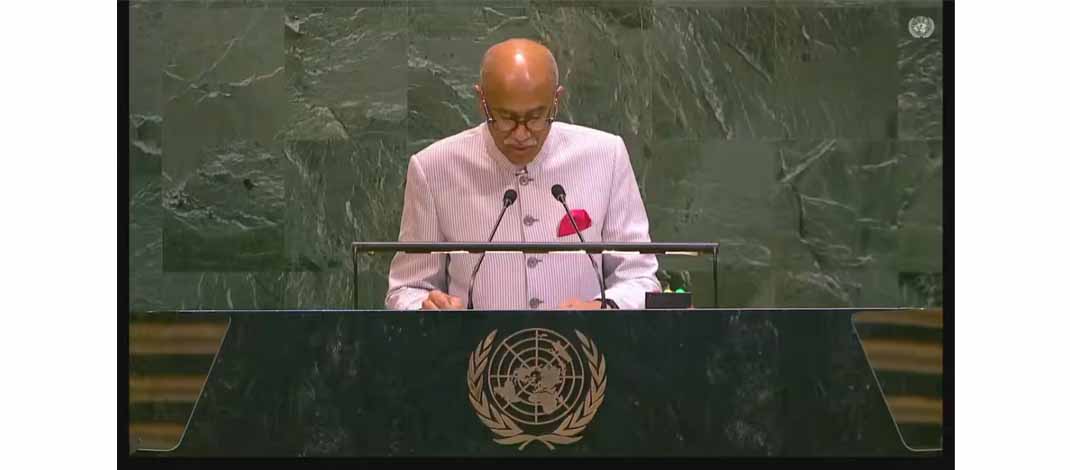
New Delhi /United Nations/New York : India’s Permanent Representative to the United Nations, Ambassador Parvathaneni Harish, has reiterated India’s unwavering commitment to the global fight against terrorism, calling for stronger international cooperation and the early adoption of the Comprehensive Convention on International Terrorism (CCIT).
Delivering India’s statement during the adoption of the Ninth Review of the United Nations Global Counter-Terrorism Strategy (GCTS) at the United Nations Headquarters in New York, Ambassador Harish reaffirmed India’s policy of zero tolerance towards terrorism.
Quoting Prime Minister Narendra Modi, Ambassador Harish said, “Terror anywhere threatens peace everywhere,” stressing that terrorism remains one of the gravest threats to international peace and security.
He told the UN that India’s long experience as a victim of cross-border terrorism has shaped its firm and consistent approach against all forms of terrorism, and underscored the need for a united global response without double standards.
Ambassador Harish urged UN member states to adopt the Comprehensive Convention on International Terrorism (CCIT), describing it as a crucial step towards creating a stronger international legal framework to combat terrorism.
Highlighting India’s contributions to global counter-terrorism efforts, he referred to the Delhi Declaration on Terrorism and Emerging Technologies, which is helping shape international guidelines on addressing the misuse of emerging technologies by terrorist groups. He also noted India’s sustained efforts to strengthen the global fight against terror financing.
The Permanent Representative said India continues to work closely with the United Nations Office of Counter-Terrorism (UNOCT) and other UN entities, while also making financial contributions to capacity-building projects aimed at enhancing global counter-terrorism capabilities.
Reaffirming India’s commitment to multilateral cooperation, Ambassador Harish said India stands ready to work with all UN member states to strengthen the global counter-terrorism architecture. He also supported a more streamlined and focused implementation of the United Nations Global Counter-Terrorism Strategy, while maintaining a balanced approach across all four pillars of the framework.