
Font Size
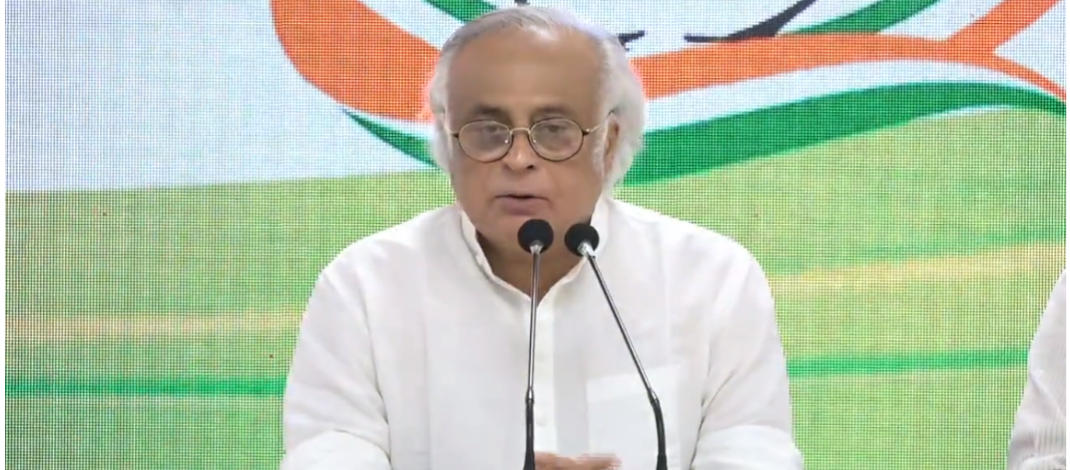
New Delhi : Following Prime Minister Narendra Modi’s bilateral summit with Chinese President Xi Jinping, Congress general secretary Jairam Ramesh raised four unresolved questions on India’s China policy in a statement dated September 13, 2026:
-
- The 2020 “clean chit” — Ramesh referenced Modi’s June 19, 2020 remark that no one had intruded into Indian territory, made just days after twenty Indian soldiers died in the Galwan Valley clash. He argued this statement, never retracted, undermined India’s later negotiating leverage.
- Territorial concerns in Ladakh and Arunachal Pradesh — He claimed India has quietly given up traditional patrolling and grazing areas in Eastern Ladakh, while China has stepped up activity in Arunachal Pradesh — renaming locations, reasserting old territorial claims, and advancing a large hydropower project on the Brahmaputra that could affect water security in India’s northeast.
Statement by Shri @Jairam_Ramesh, General Secretary (Communications), Indian National Congress, on PM Narendra Modi’s bilateral summit with President Xi Jinping. pic.twitter.com/17UAsbzXjn
— Congress (@INCIndia) September 13, 2026
- China’s role during Operation Sindoor — Ramesh contrasted a July 2025 statement by a senior Army official describing China’s significant support for Pakistan during the operation with an apparently softer assessment from a former defence chief in August 2026, questioning whether this shift was timed to smooth the path to the Modi-Xi meeting.
- Trade imbalance — He cited a record $112.6 billion trade deficit with China in 2025-26, arguing it has hurt Indian industry, particularly small and medium enterprises, and undercut the “Make in India” push.
Ramesh concluded that while normalizing India-China relations is reasonable, what he’s observed instead is a pattern of “calibrated capitulation” on Modi’s part.