
Suvash C Choudhary /The Public World
Gurugram : Union Urban Development and Power Minister Manohar Lal strongly advocated for the Regional Rapid Transit System (RRTS transport system ) to connect long-distance areas. He stated that given the growing demand for rapid transport systems in the country, an RRTS policy will be formulated soon. He stated that the first project using this new technology, covering a distance of more than 125 kilometers, has already begun operations on the Sarai Kale Khan-Meerut track, while work on two other projects will commence soon. One is from Sarai Kale Khan to Bawal, Haryana, and the other is from Sarai Kale Khan to Karnal, Haryana.
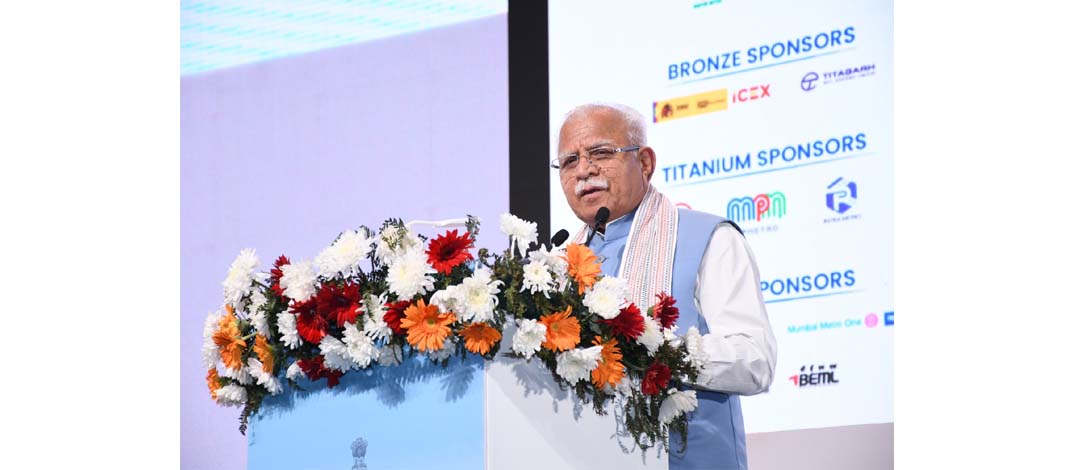
Union Minister Manohar Lal was addressing the Urban Mobility India 2025 conference held in Gurugram today. He stated that metro rail becomes unsuitable for distances exceeding 50 kilometers or distances exceeding one and a half hours. In such a situation, working people need a faster transportation system than the metro rail to cover longer distances. The RRTS transport system, based on new technology, is useful for this purpose. This transport system, introduced to cover the approximately 125-kilometer distance between Sarai Kale Khasi and Meerut, has alleviated the difficulties faced by people traveling in that direction.
He stated that while the demand for metro rail is increasing in various states across the country, the demand for RRTS transport systems for faster travel is also increasing in major cities like Kolkata and Mumbai. Therefore, the central government is soon introducing an RRTS policy that will expand this transport system to facilitate daily commutes between long-distance cities.
He said that the Union Ministry of Urban Development will soon begin construction of the RRTS track to provide high-speed transportation from Sesrai Kale Khan to Bawal in Haryana, and from Sesrai Kale Khan to Karnal in Haryana. This will not only facilitate the movement of people travelling between two directions in Delhi-NCR, but will also save time and money.
