
Study to cover 10 States/UTs, 50 districts, 150 blocks, 250 roads and around 5,000 households
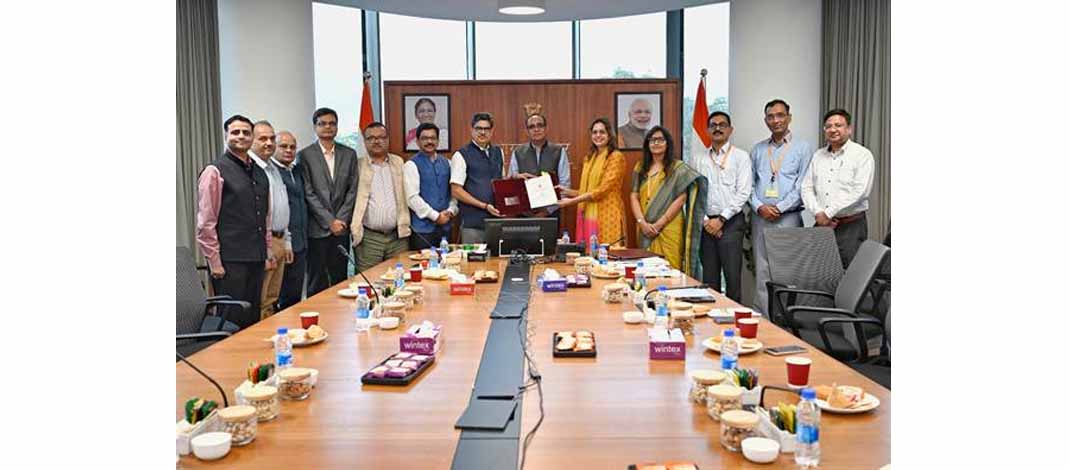
New Delhi: The National Rural Infrastructure Development Agency (NRIDA), Ministry of Rural Development, Government of India, and the Indian Institute of Management Kolkata (IIM Kolkata) have signed a Memorandum of Understanding (MoU) to undertake a comprehensive four-year longitudinal Impact Assessment Study of roads constructed under PMGSY-IV and PM-JANMAN.
The MoU was signed by Aditi Singh (IAS), Director General, NRIDA, on behalf of NRIDA, Ministry of Rural Development, and Prof. Alok Kumar Rai, Director, IIM Kolkata. The signing ceremony was held in the presence of Secretary, Rural Development, Rohit Kansal, along with senior officials from the Ministry of Rural Development and IIM Kolkata.
The collaboration marks an important step towards strengthening evidence-based assessment and outcome monitoring of rural road connectivity programmes.
Study to track long-term impact of rural connectivity
The four-year longitudinal study will examine how improved road connectivity affects the lives and livelihoods of rural households over time.
The assessment will cover 10 States/UTs — Andhra Pradesh, Assam, Chhattisgarh, Jammu & Kashmir, Jharkhand, Madhya Pradesh, Odisha, Rajasthan, Sikkim and Uttarakhand.
The study will encompass:
- 50 districts
- 150 blocks
- 250 roads
- Approximately 5,000 households
The research will adopt a longitudinal methodology involving a Baseline Survey (Pre-Construction Survey) and an Endline Survey (Post-Construction Survey) to track changes over time.
The study will assess the impact of rural roads on mobility, accessibility, socio-economic conditions and access to essential services.
Four-year assessment framework
The study will be implemented in three broad phases:
- Baseline Survey: 14 months
- Transition Period: Approximately 12 months
- Endline Survey: 22 months
This approach will enable researchers to compare conditions before and after road construction and assess whether connectivity improvements translate into sustained developmental gains.
Focus on livelihoods, agriculture and household welfare
The study is expected to generate evidence on the long-term impact of rural connectivity on livelihoods, employment, income diversification, agriculture, non-farm activities and access to markets.
It will also examine changes in household welfare and rural deprivation, providing a broader assessment of how improved roads contribute to socio-economic development.
Particular attention will be given to changes in travel time and transportation costs, mobility, employment and livelihood opportunities, as well as migration patterns.
Education, healthcare and women’s empowerment
The assessment will also examine the impact of improved connectivity on access to education, healthcare, essential public services and financial services.
The study will assess possible changes in women’s empowerment and safety, while examining variations in outcomes across different geographical regions and vulnerable population groups.
Researchers will track how these indicators evolve over time to develop a comprehensive picture of the long-term benefits of rural road connectivity.
Identifying implementation gaps and policy priorities
Another important component of the study will be to assess the sustainability of socio-economic benefits generated by improved rural connectivity.
The findings may help identify implementation gaps, emerging challenges and areas requiring policy intervention, while providing evidence for improving the design and delivery of future rural infrastructure programmes.
The partnership between NRIDA, Ministry of Rural Development and IIM Kolkata is expected to provide valuable inputs for programme review, outcome monitoring, evidence-based policy formulation and future planning in rural infrastructure development.
Overall, the longitudinal assessment seeks to move beyond measuring the construction of rural roads to understanding their long-term impact on rural communities, economic opportunities and access to essential services.