
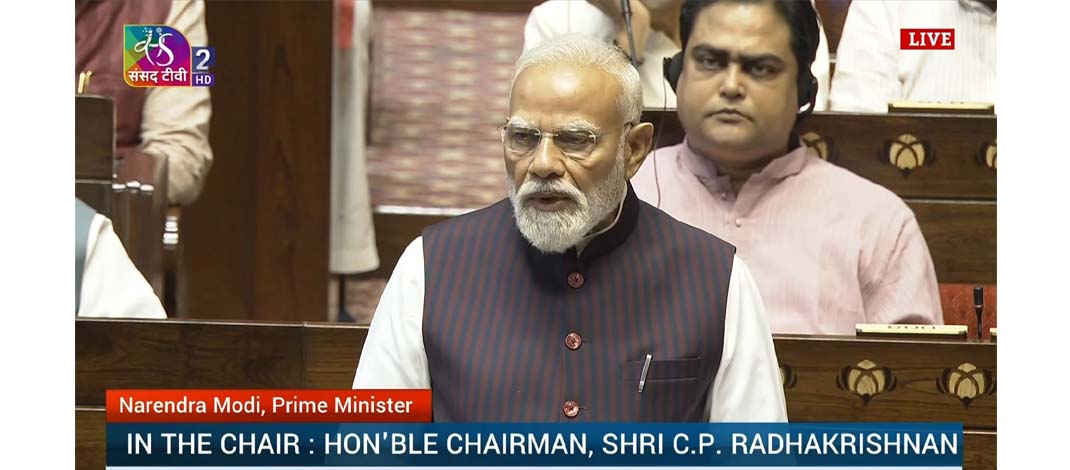
New Delhi: Prime Minister Narendra Modi on Tuesday addressed the Rajya Sabha, highlighting the far-reaching economic consequences of the ongoing conflict in West Asia involving Iran, Israel, and the United States. He cautioned that the crisis has significantly shaken the global economy and warned that recovery will take time.
Emphasizing India’s preparedness, the Prime Minister stated that continuous efforts are underway to minimize the impact of the geopolitical crisis on the Indian economy, which continues to remain fundamentally strong and resilient.
India’s Energy Security and Supply Assurance
Addressing concerns over fuel availability, Modi reassured the House that India has sufficient reserves of crude oil and robust mechanisms to maintain uninterrupted supply chains. He stressed the government’s strategic push to reduce dependency on a single source of energy imports, ensuring long-term energy security.
The government is also accelerating the adoption of Piped Natural Gas (PNG) alongside Liquefied Petroleum Gas (LPG) to strengthen domestic energy infrastructure.
₹70,000 Crore Push for ‘Made in India’ Ships
Highlighting vulnerabilities in global trade, Modi noted that over 90% of India’s trade is dependent on foreign vessels, making the country susceptible during international disruptions.
To counter this, the government has launched a ₹70,000 crore initiative to promote indigenous shipbuilding, a major step toward Atmanirbhar Bharat (self-reliant India) in the maritime sector.
Global Trade Disruptions and Strategic Concerns
The Prime Minister expressed serious concern over disruptions in key maritime routes, particularly the Strait of Hormuz, where several international vessels are currently stranded.
He strongly condemned attacks on:
- Commercial shipping vessels
- Civilian populations and infrastructure
- Energy and transport networks
Calling such actions “unacceptable,” Modi reiterated India’s stand for peaceful resolution through dialogue and diplomacy.
Impact on Essential Commodities and Agriculture
The ongoing crisis has disrupted global supply chains, affecting the availability of:
- Petrol and diesel
- Cooking gas
- Fertilizers
The Prime Minister assured that India is actively working to ensure the safe passage of ships carrying critical supplies, safeguarding both energy needs and agricultural productivity.
Diplomatic Outreach and Global Engagement
Modi revealed that since the conflict began, he has held multiple high-level discussions with leaders across West Asia, maintaining close coordination with Gulf nations as well as Iran, Israel, and the United States.
India continues to advocate for:
- De-escalation of tensions
- Peaceful negotiations
- Diplomatic engagement as the only viable solution
Concern for Indian Citizens Abroad
With nearly 10 million Indians living and working in Gulf countries, the government is closely monitoring the situation to ensure their safety and economic security.
Additionally, the presence of Indian crew members on stranded international vessels has added to India’s concerns, prompting intensified diplomatic efforts.
Warning Against Hoarding and Black Marketing
Amid the crisis, Modi issued a stern warning against black marketing and hoarding of essential commodities, urging authorities to take swift and strict action against such practices to protect consumers.
Conclusion: A Call for Unity and Peace
The Prime Minister concluded by urging the Rajya Sabha to send a unified message of peace to the global community, stressing that crises of this scale test not only economic resilience but also collective resolve.