
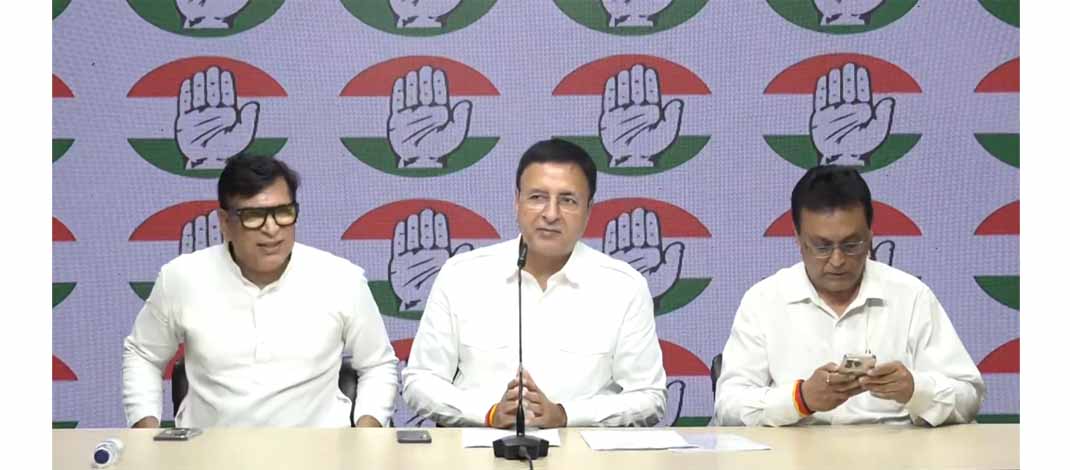
New Delhi: Congress General Secretary and Rajya Sabha MP Randeep Singh Surjewala on Thursday accused the Narendra Modi government of failing to anticipate a possible shortage of sugar and allowing prices to rise ahead of the festive season.
Addressing a press conference at the Congress headquarters, Surjewala claimed that sugar prices had increased from around ₹45 per kg to as high as ₹75 per kg in some markets. He alleged that the price rise was placing an additional burden on ordinary households and benefiting profiteers, hoarders and black-market operators.
Calling the situation the government’s “new masterstroke”, Surjewala criticised BJP leaders for allegedly describing the impact of inflation as a “masterstroke”. In a satirical reference to rising prices, he said the government was effectively claiming that expensive petrol and diesel could reduce obesity, higher cooking-gas prices could encourage people to eat less, and costlier cooking oil could protect consumers from heart disease.
He also referred to the government’s decision to import sugar, saying that the measure had come too late to provide meaningful relief during the main festival period. Surjewala said the government had announced the import of 10 lakh tonnes of raw sugar in August, even though the imported consignment could take 45 to 55 days to arrive by sea. He added that the sugar would then require processing before reaching the market.
According to Surjewala, the imported sugar was therefore unlikely to become available before the end of October and could reach consumers only towards the end of November. He alleged that the delay meant the measure would not adequately address demand during the festival season.
Congress Cites Stock and Production Figures
Surjewala said the opening stock of sugar for the 2025–26 season was approximately 5 million tonnes, around 3 million tonnes lower than the previous year.
He also referred to a press release issued by the Indian Sugar and Bio-energy Manufacturers Association, formerly known as ISMA, on April 30, 2026, which placed sugar production for 2025–26 at approximately 27.5 million tonnes.
The Congress leader argued that these figures should have alerted the government to the possibility of tighter supplies. He alleged that the Centre was aware of the situation by April but did not take timely steps to prevent prices from rising.
Surjewala said domestic sugar consumption was normally around 2.4 million tonnes per month, increasing to approximately 3 million tonnes per month during the festival season. He estimated that the country could consume around 12 million tonnes of sugar between August and November.
Based on an assumed additional consumer payment of ₹30 per kg, he calculated that the additional burden on consumers could reach ₹36,000 crore during the four-month period. Surjewala alleged that this amount would represent an “organised robbery” benefiting sugar profiteers and black-market operators, and questioned whether the situation indicated collusion between market players and those in power.
Government Announces Measures
The Centre has attributed the increase in sugar prices to a combination of lower-than-expected production, increased festive demand, weather-related crop damage, tightening global supplies and possible hoarding or speculative activity by some market participants.
According to government figures, the average retail price of sugar increased from ₹48.18 per kg on July 20 to ₹55.70 per kg on August 20, 2026. Recent market reports also indicated that retail prices had reached approximately ₹63.05 per kg on August 24, while the all-India wholesale average stood at around ₹58.29 per kg.
On August 20, the government permitted duty-free imports of 10 lakh tonnes of raw sugar to improve domestic availability. It also introduced stock-control measures, including:
- A 400-tonne stock limit for dealers until November 30;
- A requirement that bulk consumers hold no more than 15 days’ stock from September 1; and
- Physical verification of inventories held by sugar mills.
The government has further advised sugar mills and state authorities to begin crushing operations from October 15. It expects sugar output in October to exceed 10 lakh tonnes, compared with the usual production of around 3 to 4 lakh tonnes during that month.
The Centre has also revised the conditions governing imported raw sugar, allowing refiners two months from the filing of the bill of entry to process and sell the product.
Political Dispute Over Price Rise
The Congress has maintained that the government failed to act despite having advance information about reduced opening stocks and production constraints. The government, on the other hand, has said that it is taking steps to augment supplies, prevent hoarding and moderate prices ahead of the festive season.
Surjewala’s estimate of a ₹36,000-crore additional burden is based on the assumption that consumers would pay ₹30 more per kg on 12 million tonnes of sugar. It is a political calculation put forward by the Congress and is not an official assessment of consumer losses or illicit market profits.