
Amit Shah says LNG-powered rail operations can reduce diesel dependence, pollution and fuel-import burden
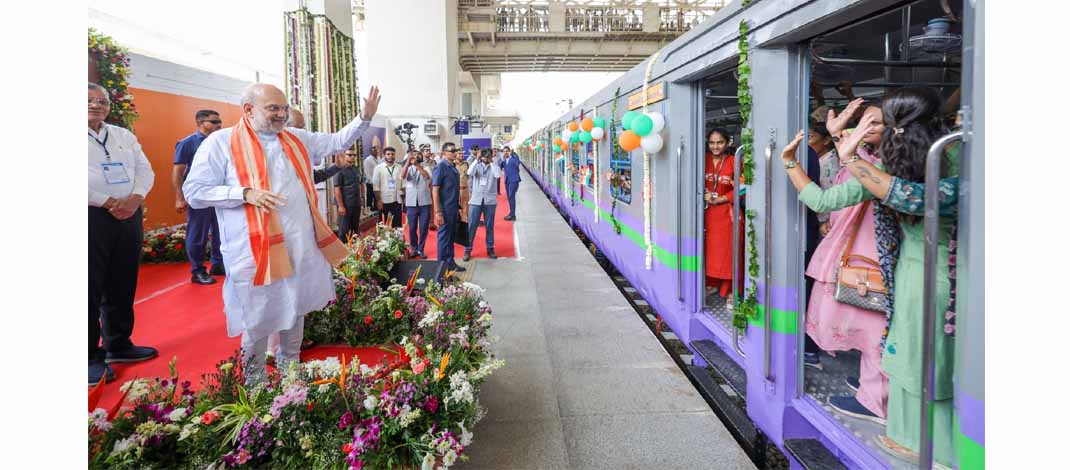
Ahmedabad: Union Home Minister Amit Shah flagged off India’s first LNG-powered train from Sabarmati Railway Station in Ahmedabad, describing the initiative as an important step towards making Indian Railways more environmentally sustainable.
Speaking at the event on September 27, Shah said the introduction of the LNG-powered train would help reduce the railways’ dependence on diesel and contribute to lower pollution. He also linked the shift towards cleaner fuels with foreign-exchange savings and the broader objective of developing greener railway operations. (Press Information Bureau)
The inauguration was part of a wider programme at Sabarmati, where ₹1,472 crore worth of railway development projects were also inaugurated. Shah also inaugurated a WAG-12 locomotive maintenance shed. (Press Information Bureau)
Cleaner fuel alongside railway modernisation
Shah said Indian Railways is being modernised through expansion of its network, upgraded infrastructure, new technologies and cleaner propulsion systems. He highlighted developments such as Dedicated Freight Corridors, Rapid Rail systems and modernised railway stations as part of the broader transformation of the railway network. (Press Information Bureau)
The Sabarmati event also highlighted the growing focus on technology and energy efficiency in freight operations. Shah noted that the 12,000-horsepower twin-section WAG-12 locomotive can haul a load equivalent to around 600 trucks, reducing the need to deploy two locomotives for the same task. (Press Information Bureau)
Indian Railways is simultaneously expanding other technology-led initiatives. For instance, Kavach Version 4.0 has been approved for 598 route kilometres across 48 block sections of the Ahmedabad Division, adding to earlier sanctioned coverage and strengthening train-safety systems. (Press Information Bureau)
The first LNG-powered train thus represents another element of the railways’ ongoing efforts to combine operational efficiency, technological modernisation and cleaner energy use as India works towards a more sustainable railway network.