
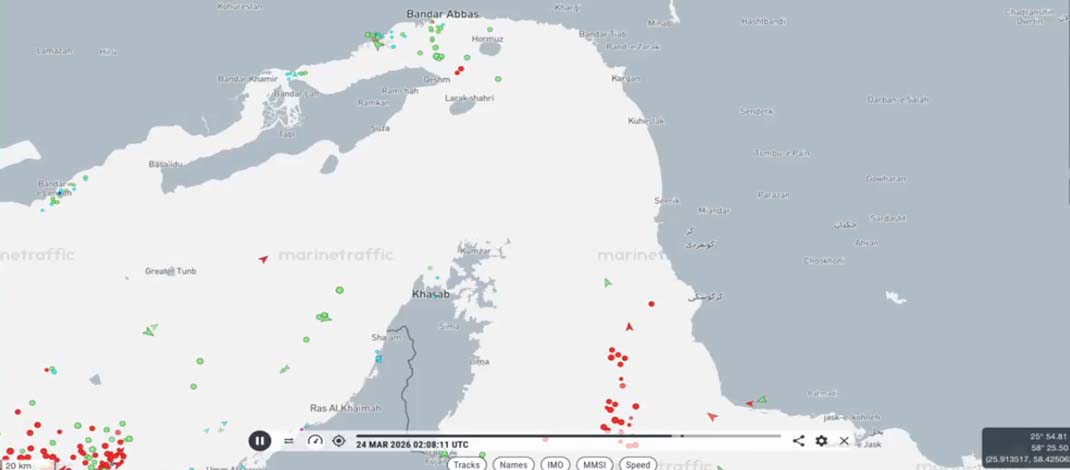
New Delhi : Amid the continuing conflict in the Middle East, U.S. intelligence assessments indicate that Iran is unlikely to reopen the strategically vital Strait of Hormuz in the near future. The waterway has emerged as Tehran’s most powerful leverage point against the United States.
The Strait of Hormuz is one of the world’s most critical energy corridors, with nearly 20% of global oil supplies passing through it. By restricting access, Iran holds the ability to disrupt supply chains, drive up oil prices, and exert significant economic pressure on Washington and its allies.
According to intelligence reports, Iran is deliberately maintaining tight control over the route to keep oil prices elevated, thereby forcing the United States to seek a quicker resolution to the ongoing conflict, which has now stretched close to five weeks. Domestic support for the war within the U.S. remains limited.
U.S. President Donald Trump has asserted that, if required, American forces could reopen the Strait swiftly. In a social media statement, he claimed the U.S. has the capability to secure the passage in a short time. However, military and geopolitical experts caution that such an operation would be highly complex and could escalate into a prolonged and costly confrontation.
Experts further emphasize that Iran views control of the Strait as a strategic asset of immense value—potentially more impactful than conventional weapons due to its far-reaching effects on the global economy. Tehran has reportedly employed multiple tactics to assert dominance over the route, including targeting vessels, deploying naval mines, and imposing costs for safe passage.
As a result, maritime traffic through the Strait has become increasingly risky and expensive, with several ships halting operations altogether. The global impact is already visible, with oil prices surging and some countries beginning to face fuel shortages.
Analysts warn that any U.S. attempt to forcibly reopen the Strait could result in significant losses. The narrow geography of the region makes naval and air assets particularly vulnerable to attack, increasing the risks of escalation.
U.S. intelligence further suggests that even after the conflict subsides, Iran is likely to maintain its strategic hold over the Strait of Hormuz, ensuring continued leverage in future geopolitical confrontations.
At present, the Strait of Hormuz has become the focal point where global energy security, military strategy, and international politics intersect.