
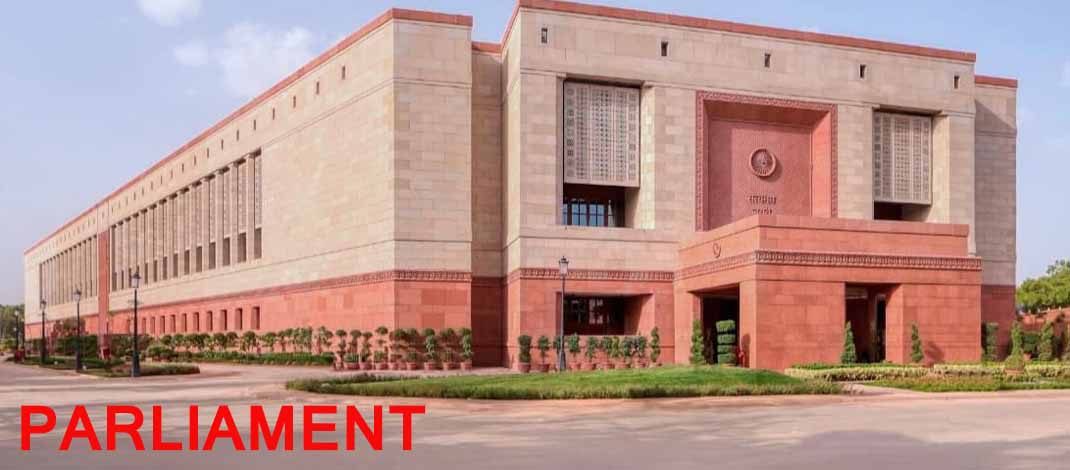
New Delhi : India’s textile and apparel sector, including handicrafts, has demonstrated stability in export performance during the current financial year, despite global challenges and tariff pressures from the United States, according to the Ministry of Textiles. The information was provided by Minister of State for Textiles, Shri Pabitra, in a written reply to the Lok Sabha today.
Export Performance: April–September 2025
India’s total exports of textiles, apparel, and handicrafts stood at US$ 18,235.44 million during April–September 2025, marking a marginal growth of 0.1% over the same period in 2024 (US$ 18,220.54 million).
Exports to the United States slightly declined from US$ 5,361.85 million to US$ 5,224.16 million, while exports to the rest of the world rose from US$ 12,858.69 million to US$ 13,011.27 million.
In Tamil Nadu, the country’s largest textile-exporting state, exports increased from US$ 3,975.04 million to US$ 4,078.06 million, registering a 2.6% growth. Key clusters including Tirupur, Karur, Erode, Coimbatore, and Salem saw exports rise by 11.4% during the same period.
Government Engagement and Consultations
The Ministry is in continuous consultation with exporters, including MSMEs, to assess the impact of US tariffs and other challenges. Two consultative meetings were convened with large and small textile exporters covering the entire value chain to address trade concerns.
Schemes and Initiatives to Boost the Sector
The Government has implemented multiple initiatives to enhance competitiveness, production, and export potential:
-
Infrastructure and Manufacturing Support
-
PM MITRA Parks Scheme: Creates modern, integrated textile infrastructure.
-
Production Linked Incentive (PLI) Scheme: Focused on MMF fabrics, MMF apparel, and technical textiles.
-
National Technical Textiles Mission: Promotes R&D, innovation, and market development.
-
SAMARTH: Skilling programs for demand-driven, placement-oriented training.
-
Silk Samagra-2, National Handloom Development Program, and Handicrafts Cluster Development: Support end-to-end development of the handloom, silk, and handicrafts sectors.
-
-
Export Facilitation
-
Advance Authorisation Scheme: Export Obligation period extended from 6 to 18 months for inputs under mandatory Quality Control Orders.
-
PLI Scheme Revisions: Expanded product coverage, relaxed investment thresholds, and simplified procedures.
-
Duty Exemption on Cotton (HS 5201): Effective until 31 December 2025, reducing input costs for cotton-based textiles.
-
Rationalized GST Rates: Structural anomalies addressed to boost demand and exports.
-
RoSCTL and RoDTEP Schemes: Provide rebates on embedded taxes; more than 15,000 exporters benefited during FY 2024-25.
-
Extension of RoDTEP until 31 March 2026.
-
-
Market Diversification and Trade Agreements
-
India has signed 15 Free Trade Agreements (FTAs), including the India-UK CETA on 24 July 2025.
-
The Ministry has also developed a 40-country market diversification strategy to reduce dependency on specific markets and increase global reach.
-
-
Financial and Non-Financial Support
-
Credit Guarantee Scheme for Exporters (CGSE): Provides 100% credit guarantee for additional credit facilities up to Rs. 20,000 crore, especially supporting MSMEs.
-
Export Promotion Mission (EPM): Combines financial support through NIRYAT PROTSAHAN and non-financial enablers via NIRYAT DISHA, covering trade finance, compliance, branding, logistics, market intelligence, and capacity building.
-
Integration with Interest Equalisation Scheme (IES) and Market Access Initiative (MAI) ensures alignment with contemporary trade needs.
-
Outlook
These measures aim to enhance India’s global competitiveness, ensure sustainable growth, and strengthen the resilience of textile and apparel exports, including key clusters in Tamil Nadu.