
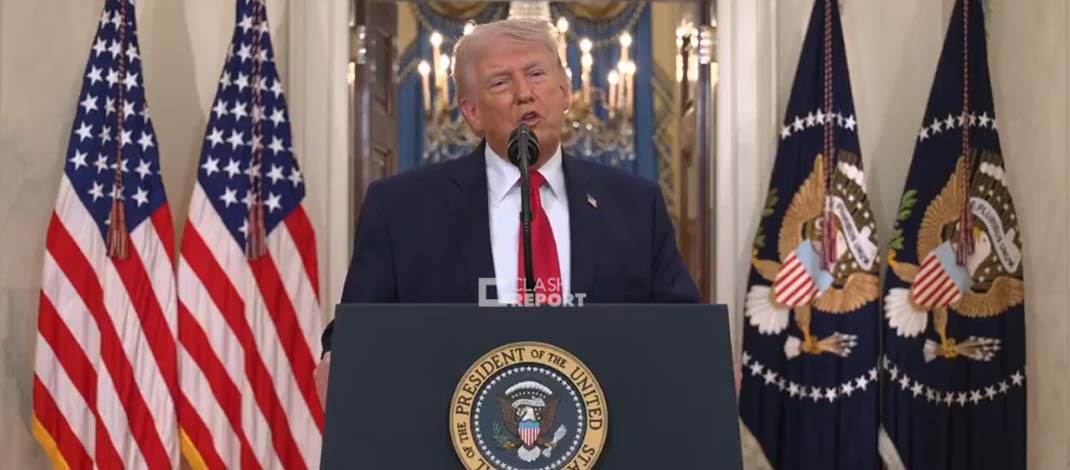
New Delhi : US President Donald Trump, in a national address, asserted that American military operations have achieved significant progress in the ongoing conflict involving Iran, while warning of further escalation if a resolution is not reached soon.
Praising US forces, Trump highlighted what he described as a swift and decisive military operation in Venezuela, claiming it demonstrated the strength of the rebuilt US military. He added that Washington is now working closely with Venezuela in energy cooperation, reducing reliance on Middle Eastern oil supplies.
On the Iran conflict, Trump said key military objectives are “close to completion” and indicated that the war could continue for another two to three weeks. He warned that failure to reach an agreement could lead to intensified strikes, including potential attacks on critical infrastructure such as power plants.
The President reiterated that the United States no longer depends on oil supplies passing through the strategic Strait of Hormuz, suggesting other nations should take responsibility for securing the route.
He also claimed that Iran’s military capabilities, including its naval strength, had been significantly degraded, and issued a strong warning that continued resistance could result in severe consequences.
However, the address offered limited clarity on a diplomatic path forward. There was no detailed mention of a ceasefire framework or confirmed negotiations, even as uncertainty persists over whether Iran is willing to engage in talks.
The speech also appeared to overlook domestic economic concerns, including rising energy prices and inflation. Following the address, global oil markets reacted nervously, with prices remaining elevated amid fears of prolonged conflict and supply disruptions.
Analysts suggest that while the administration projected confidence in military progress, the lack of a clear exit strategy and continued tensions around the Strait of Hormuz have heightened geopolitical and economic uncertainty.