
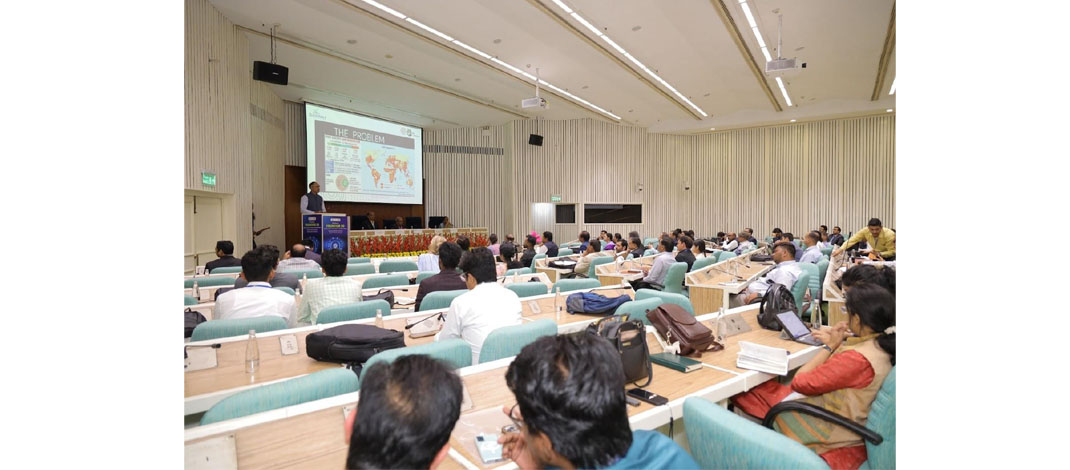
New Delhi : NITI Aayog convened the Frontier 50 Workshop on 27 February under the Aspirational Districts and Blocks Programme (ADP/ABP), signalling a strategic transition from digital governance to intelligent, AI-enabled governance in public policy. The workshop was attended by Ms Nidhi Chhibber, CEO of NITI Aayog; Prof. Abhay Karandikar, Secretary of the Department of Science and Technology; Ms Debjani Ghosh, Distinguished Fellow and Chief Architect, NITI Frontier Technology; and Shri Rohit Kumar, Additional Secretary and Mission Director, Aspirational Districts and Blocks Programme. Senior officials from the Central and State Governments, along with District Magistrates, also participated in the event.
The discussions focused on operationalising frontier technologies across 50 Aspirational Blocks, positioning them as real-world impact sandboxes. During the workshop, the ADP/ABP newsletter Aspirational Times was also released.
Inaugural Session Highlights :
The inaugural session emphasised that India’s development progresses district by district, with technology acting as a key enabler of the vision of Viksit Bharat. The session highlighted the shift from basic service digitisation towards adaptive intelligence and institutional transformation in governance. Speakers noted that frontier technologies have the potential to generate a national technology dividend, accelerate economic growth and social development, and strengthen strategic autonomy.
Key principles discussed included addressing real governance challenges, promoting data-driven decision-making, enhancing institutional capacity, breaking administrative silos, and embedding technology within leadership frameworks built on trust.
Thematic Sessions on Frontier Technology :
During the thematic sessions, eight Ministries presented initiatives demonstrating digital integration in district-level decision-making. The National Quality Assurance Standards framework has certified public health facilities through the SaQsham platform across 29 States and Union Territories.
Under POSHAN 2.0, the POSHAN Tracker is monitoring more than 14 lakh Anganwadi Centres in near real time, enabling measurable improvements in nutrition delivery. The Jal Jeevan Mission showcased progress in expanding rural tap water coverage through geo-tagged assets and pipeline mapping on PM Gati Shakti, with emphasis on district leadership, community ownership through Village Water and Sanitation Committees, and water quality testing.
Digital livestock governance through Pashu Aadhar is facilitating real-time vaccination tracking and building AI-ready datasets for disease surveillance. The Digital Agriculture Mission is developing interoperable digital public infrastructure through AgriStack and Bharat Vistaar, integrating farmer registries, geo-referenced maps, and multilingual advisories. In banking and financial services, artificial intelligence is being used for credit scoring, fraud detection, AML and KYC automation, and monitoring financial inclusion indicators.
Discussions also highlighted emerging requirements such as need assessments in borewell-dependent regions, API integration, improved POSHAN data validation, and augmented reality-based training for frontline workers.
Group Discussions and Way Forward :
The workshop featured demonstrations of frontier technology applications, including IndiaAI sovereign stack solutions presented by officials from the Ministry of Electronics and Information Technology, the NITI Frontier Tech Repository, AI-enabled soil diagnostics, and the model of Sindhudurg as India’s first fully AI-enabled district under a state-owned SPV framework. Another initiative, PadhaiWithAI in Tonk district, showcased improvements in Class 10 Mathematics outcomes through AI-supported learning tools.
Under the Frontier 50 initiative, AI, digital intelligence, and telecom infrastructure are being integrated through a phygital model supported by Samriddhi Kendras as assisted digital access points. The workshop also provided an opportunity for districts to present technology-driven interventions addressing key challenges at the district and block levels.
Conclusion :
Concluding the workshop, NITI Aayog emphasised the importance of micro-localisation, interoperable district data stacks, measurable outcomes, and accountable leadership to drive the next phase of governance transformation powered by frontier technologies.