
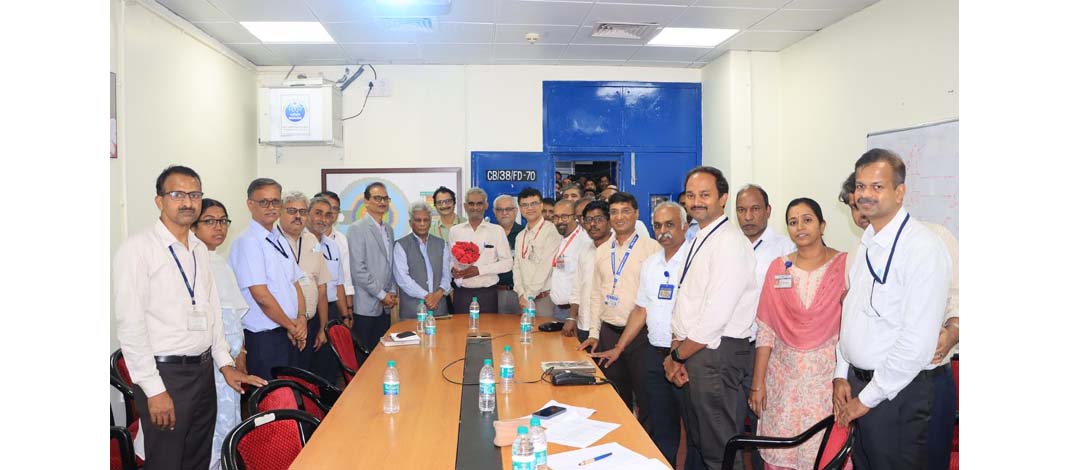
New Delhi /Kalpakkam : India has achieved a major milestone in its nuclear energy programme as the 500 MWe Prototype Fast Breeder Reactor (PFBR) at Kalpakkam, Tamil Nadu successfully reached “first criticality” on April 6, 2026. This means the reactor has started a controlled nuclear reaction for the first time, marking an important step towards long-term energy security.
The achievement took place in the presence of Ajit Kumar Mohanty, Secretary of the Department of Atomic Energy, along with senior officials and scientists. The project received clearance from the Atomic Energy Regulatory Board after thorough safety checks.
The reactor was designed by the Indira Gandhi Centre for Atomic Research (IGCAR) and built by Bharatiya Nabhikiya Vidyut Nigam Limited (BHAVINI), both under the Department of Atomic Energy.
Fast Breeder Reactors are important because they can produce more fuel than they consume. The PFBR uses a special type of fuel and can also help in using thorium in the future—an area where India has large resources.
This development brings India closer to completing its three-stage nuclear power programme, which aims to use nuclear energy more efficiently and sustainably.
The project also shows India’s growing strength in advanced technology, as most of the reactor has been built using indigenous design and components. It supports the vision of self-reliance under the Atmanirbhar Bharat initiative.
Overall, this milestone is a big step towards clean, reliable, and long-term energy for the country, while also strengthening India’s position in advanced nuclear technology.