
Drug Traffickers’ Property worth ₹53 Crore Seized; 3,350 Villages and 876 Wards Declared Drug-Free
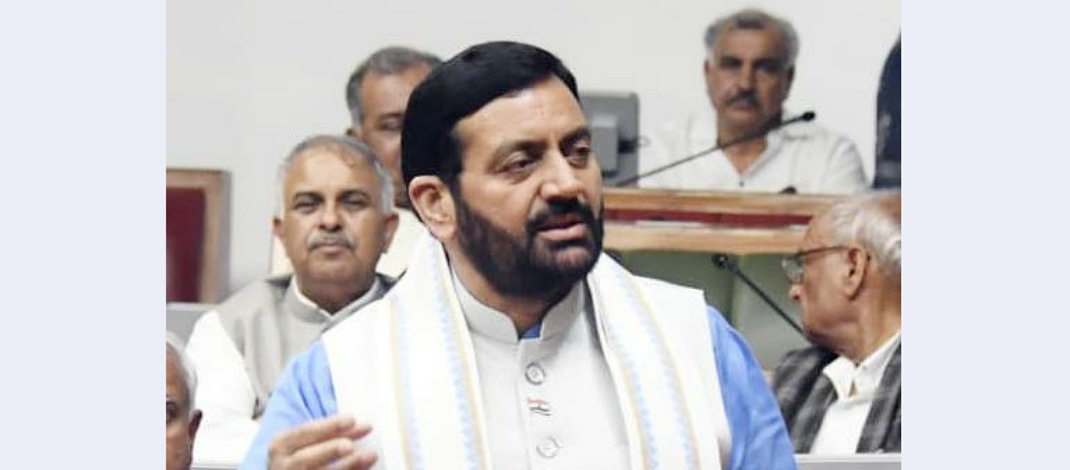
Chandigarh : During his address in the Budget Session of the Haryana Legislative Assembly today, Chief Minister Nayab Singh Saini said the state government is giving the highest priority to peace, security and the rule of law in Haryana, and that the positive results of these efforts are clearly visible on the ground.
He stated that it is a matter of pride for Haryana that in fully implementing the new criminal laws, the state ranks second in the country. Due to better investigation and modern policing, the conviction rate in cases registered from July 1, 2024 onwards has increased to 74.13 percent.
The Chief Minister presented comparative data to highlight improvements in crime trends. He said that between 2004 and 2014, murder cases were increasing annually at a rate of 3.81 percent, whereas from 2014 to 2025 the annual rate has reduced to 1.75 percent. In cases of rioting, the annual increase between 2004 and 2014 was 9.74 percent, which has declined to 2.41 percent between 2014 and 2025.
He said that the government has spent ₹300 crore on police modernisation, and the recruitment process for 5,500 new police personnel is underway. Through Dial 112, a response time of 9 minutes and 44 seconds has been achieved, which he described as a sign of accountable governance.
Zero-tolerance policy against drugs
Addressing the issue of drug abuse, the Chief Minister said that the Haryana Government is working with a zero-tolerance policy against narcotics. Efforts are being made to create public awareness, crack down on drug traffickers and identify and treat drug-dependent individuals.
To strengthen coordination with neighbouring states, an Inter-State Secretariat has been established in Panchkula. Representatives from seven northern states and Union Territories, namely Haryana, Punjab, Delhi, Himachal Pradesh, Chandigarh, Uttarakhand and Rajasthan, share information there to curb drug trafficking. For a national war against drugs, the Ministry of Home Affairs has launched the MANAS portal, which is monitored directly by the Union Home Minister. The identity of informants providing information about illegal drug trade is kept confidential. He reiterated that under the resolve of Nasha-Mukt Haryana, the government is moving forward with Action Plan 2029.
In 2023, 3,823 cases were registered under the NDPS Act and 5,119 persons were arrested. In 2024, 3,331 cases were registered and 5,094 persons were arrested. In cases involving commercial quantities under the NDPS Act, there was a 37 percent increase in cases and a 69 percent increase in arrests in 2024 compared to the previous year. The conviction rate in NDPS cases improved to 54 percent in 2024 from 48 percent in the previous year.
The government has seized properties worth approximately ₹53 crore belonging to drug traffickers and demolished 111 properties. Through anti-drug campaigns, 3,350 villages and 876 wards have been declared drug-free. A total of 7,523 drug users have been identified and provided treatment.
Under the ‘Haryana Uday’ campaign, 2,482 programmes were organised with participation of 16,50,000 people. Over the past five years, nearly 26,000 criminals involved in drug trafficking have been sent to jail. Last year alone, around 5,000 such individuals were arrested, including approximately 1,000 major traffickers from whom commercial quantities of drugs were recovered.
To speed up convictions, Fast Track Courts, prompt FSL reports and effective pursuit of under-trial cases have proven effective. The conviction rate in under-trial cases has been increased from 41 percent to 54 percent. The second step in the fight against drugs is treatment and rehabilitation of addicts. In this direction, 161 de-addiction, counselling and rehabilitation centres have been opened across Haryana. The third step is spreading awareness, for which the government is working with saints, voluntary organisations and civil society groups to create awareness against drug abuse.