
– GUVNL Appeals Dismissed ; Boost to State Regulators Including HERC
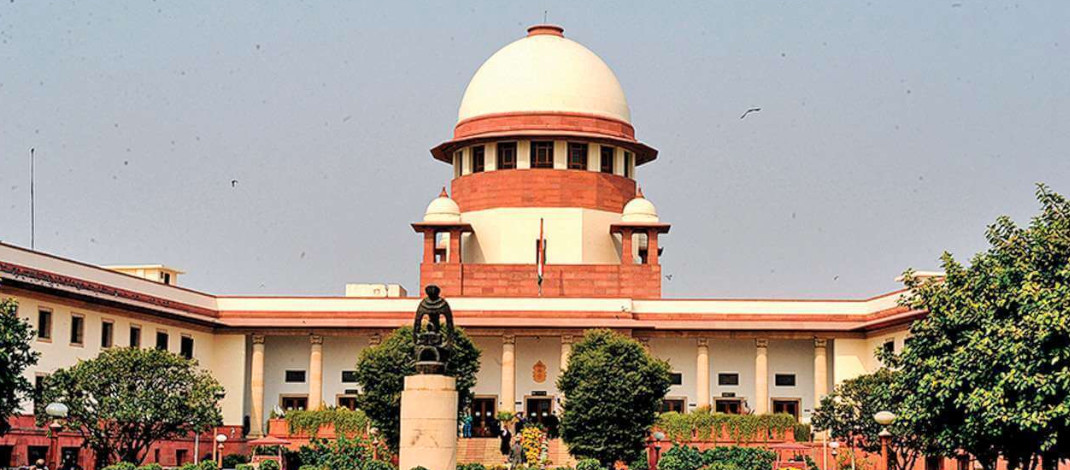
Chandigarh : In a decisive judgment that reinforces the supremacy of electricity regulatory commissions across India, the Supreme Court on Monday dismissed a batch of appeals filed by Gujarat Urja Vikas Nigam Limited (GUVNL) and held that power purchase tariffs cannot be contractually fixed between parties but must be statutorily determined by the Appropriate Commission under the Electricity Act, 2003.
The ruling by Apex Court came down strongly on GUVNL’s approach and emphasized that as a State Instrumentality, GUVNL must act like a “model citizen”, not a profit-driven private enterprise. The Court criticized GUVNL for exhibiting behavior “akin to a Shylock,” invoking the literary character known for demanding unreasonable terms, to describe GUVNL’s insistence on enforcing an inapplicable tariff on wind energy producers.
Background of the Case
The dispute arose when four wind energy companies, who had earlier signed Power Purchase Agreements (PPAs) with GUVNL at a fixed tariff of ₹3.56 per unit, later approached the Gujarat Electricity Regulatory Commission (GERC) requesting project-specific tariff determination. Their plea was based on the fact that they had not availed the benefit of Accelerated Depreciation under the Income Tax Act — a key determinant in the applicable tariff structure.
GUVNL opposed their application, arguing that the PPAs were binding and the companies could not seek a higher tariff than what was originally agreed. However, both the GERC and the Appellate Tribunal for Electricity (APTEL) sided with the power producers, allowing them to seek revised tariffs as per statutory provisions. GUVNL then moved the Supreme Court, which has now affirmed the decisions of both lower forums.
Supreme Court’s Reasoning
The apex court clarified that tariff determination under the Electricity Act is not a matter of private consensus. Instead, the Commission — a statutory body — is empowered under the 2003 Act to fix tariffs, particularly in the context of public interest and sectoral policies, especially for renewable energy sources.
> “It is manifest that the price at which power is to be procured by a distribution licensee from a generating company is not subject to private agreement but is to be fixed statutorily by the Appropriate Commission,” the Court held.
Crucially, the Court referred to Tariff Order No. 1 of 2010 issued by the GERC, which explicitly stated that the tariff of ₹3.56/kWh was applicable only to those projects availing Accelerated Depreciation. Since the respondent companies had not availed such benefit, GUVNL’s attempt to impose that tariff was deemed entirely unjustified.
Relief to Other State Commissions, Including HERC
While the case was rooted in Gujarat, the verdict carries significant implications for electricity regulatory commissions across other states. The Court’s reaffirmation of the Commission’s supremacy in tariff matters provides legal reinforcement to State Commissions, such as the Haryana Electricity Regulatory Commission (HERC), and counterparts in Madhya Pradesh, Rajasthan, Maharashtra, and beyond.
By rejecting the contractual override argument, the Court has sent a clear message — state power utilities cannot bypass or dilute renewable energy policy commitments by resorting to private agreements that contravene statutory orders.
Conclusion
The Supreme Court not only dismissed GUVNL’s legal challenge but also noted its failure to secure formal declarations regarding tax treatment at the time of entering into the PPAs. Without any such commitment from the respondent companies, the Court held that GUVNL had no indefeasible right to bind them to a tariff meant for projects availing tax incentives.
> “The appeals are wholly devoid of merit and warrant no interference. The decisions of the GERC and APTEL are hereby affirmed,” Justice Kumar concluded.
This landmark decision is expected to bolster regulatory consistency, investor confidence, and the renewable energy landscape in India — establishing that electricity tariffs are not mere contractual terms but regulated instruments anchored in public policy.