
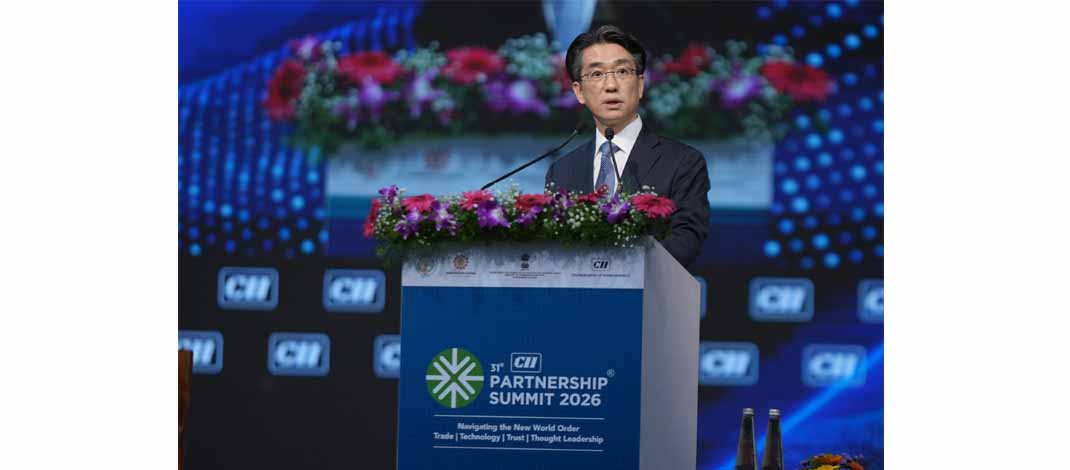
Visakhapatnam, November 12: Gwanggu Lee, Managing Director and CEO of Kia India, spoke at the inaugural session of the 31st CII Partnership Summit 2026. He said Kia’s journey in India began in Andhra Pradesh in 2017, and that the company today stands as a strong example of a successful partnership between government and industry.
He credited the state’s support and contribution for helping Kia become a leading force in India’s automotive manufacturing sector. He said the company’s continued commitment to manufacturing, CSR initiatives, job creation and regional development reflects its confidence in India and the state, as well as its long-term commitment. Lee added that Kia looks forward to strengthening the partnership further and contributing to India’s growth story.
About Gwanggu Lee
- Current role: He is Managing Director and CEO of Kia India. He was appointed in January 2024, with immediate effect.
- Succession: He is the third MD and CEO of Kia India, following Kook Hyun Shim and Tae Jin Park. Park retired after 36 years with Kia Corporation, including four years leading the India unit.
- Experience: He has more than 30 years in the automotive industry, in both developed and developing markets.
- Global postings: He has held leadership roles in the US, Canada, Italy and Mexico. He has also worked at Kia’s regional headquarters for Central and South America, and at Kia Europe’s headquarters in Germany.
- Previous role: Before moving to India, he was President of Kia Mexico. His work there is credited with helping the company grow and become a manufacturing and export hub.
- Vision for India: At his appointment he spoke of unlocking the next phase of growth by creating inspiring Kia brand experiences, with a focus on sustainable business growth and lasting value for customers, partners and employees.
- Kia India’s performance: When he took charge, the company had become the fastest automaker in India to cross Rs 30,000 crore in turnover and Rs 2,000 crore in profits, in about five years. Its India lineup then included the Seltos, Sonet and Carens.