
New law gives US President authority to impose tariffs of up to 100% on major buyers of Russian oil and gas; implications for India’s energy trade remain a key concern
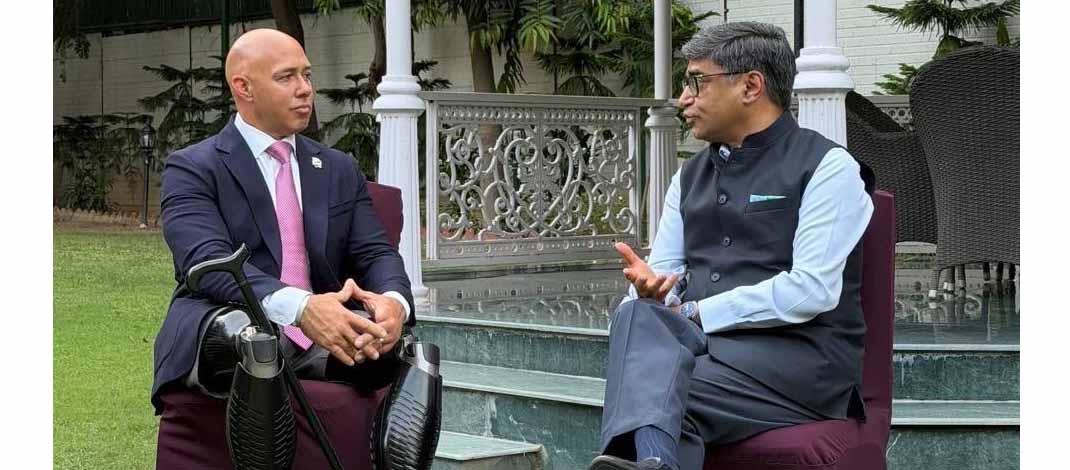
New Delhi : India has raised the issue of the newly enacted Lindsey O. Graham Sanctioning Russia and Iran Act of 2026 during discussions between Foreign Secretary Vikram Misri and a bipartisan US Congressional delegation led by Representative Brian Mast, Chairman of the House Foreign Affairs Committee.
The legislation, signed into US law on September 18, 2026, strengthens sanctions against Russia and Iran and gives the US President significant new authority to impose tariffs on countries purchasing Russian-origin crude oil and natural gas.
What does the Graham Act provide?
One of the most significant provisions concerns secondary tariffs on countries that continue to purchase Russian energy. Under the law, the US President is required to raise duties on goods imported from qualifying countries to a rate of up to 100%.
The provision applies to countries that are among the five largest importers of Russian crude oil or natural gas and continue making new purchases, as well as countries identified among the top five facilitators of Russian oil sanctions evasion. The law also allows the tariff rate to be adjusted depending on whether a country increases or reduces its purchases of Russian energy.
The legislation also introduces or strengthens sanctions targeting Russian officials, oligarchs, financial institutions and entities, while taking measures against Russia’s so-called shadow fleet involved in sanctions evasion. It further extends the Iran Sanctions Act for five years. (Senator Darline Graham)
Why is the law important for India?
The legislation has particular significance for India because Russian crude has remained an important component of India’s diversified energy sourcing. India is among the world’s major buyers of Russian oil, making the secondary-tariff provisions relevant to its trade and energy-security calculations.
Importantly, the law does not automatically mean that India will immediately face a 100% tariff. The legislation provides the US President with a mechanism to impose and adjust such duties, subject to the conditions specified in the law.
India’s concerns therefore centre on how Washington chooses to implement these provisions and how any potential measures could affect bilateral trade and India’s energy procurement.
Possible implications for India-US economic ties
If such tariffs were imposed on India, the immediate impact would be on Indian goods entering the US market, rather than directly placing a tariff on Russian oil imported by India.
A high tariff could increase the cost of Indian exports to the US and potentially affect sectors that depend heavily on the American market. At the same time, any significant change in India’s Russian-oil purchases could have implications for refining economics, energy costs and India’s broader strategy of maintaining diversified crude supplies.
The issue therefore has both trade and energy dimensions for India-US relations.
Diplomatic engagement continues
The meeting between Misri and the US Congressional delegation comes amid continuing discussions between New Delhi and Washington over the legislation. External Affairs Minister Dr. S. Jaishankar had also raised India’s concerns over the new law with US Secretary of State Marco Rubio during their recent meeting on the sidelines of the UN General Assembly. (The Indian Express)
The broader discussions are taking place alongside efforts to strengthen the India-US Comprehensive Global Strategic Partnership, including cooperation in defence, trade, energy and technology.
What happens next?
The key variable will be how and whether the Trump administration exercises the tariff authority provided by the Act. The legislation creates a powerful mechanism, but its practical impact on India will depend on future US implementation decisions, India’s response and the evolution of global oil markets.
For India, the coming period is likely to involve continued diplomatic engagement with Washington while New Delhi evaluates its energy-security requirements, trade interests and broader strategic relationship with the United States.
In short, the Graham Act has created a new potential pressure point in India-US relations, linking India’s Russian energy purchases with access to the US market. Its actual impact will depend largely on how Washington implements the new tariff provisions.