
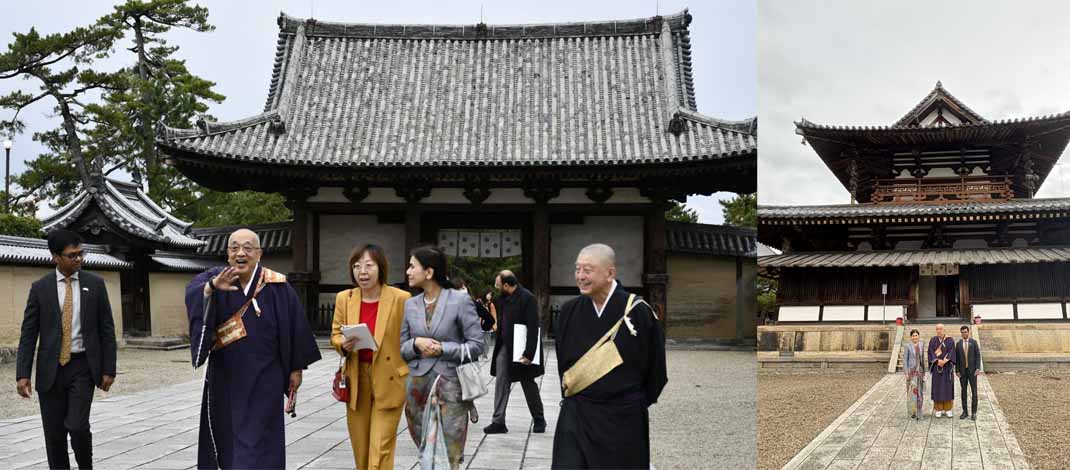
Ambassador meets Chief Abbot Reverend Furuya Shōkaku at the UNESCO World Heritage Site, renowned for housing the world’s oldest surviving wooden structures
New Delhi /Nara, Japan : India’s Ambassador to Japan, Nagma Mallick, visited the historic Hōryū-ji Temple in Nara, one of Japan’s most treasured Buddhist heritage sites, where she met Chief Abbot Reverend Furuya Shōkaku.
Sharing her experience, Ambassador Mallick described the visit as a deeply honourable and memorable occasion, highlighting the historical and cultural significance of the centuries-old temple.
Recognised as Japan’s first UNESCO World Heritage Site in 1993, Hōryū-ji is internationally renowned for preserving some of the world’s oldest surviving wooden buildings. Its architectural structures represent an extraordinary legacy of ancient Japanese craftsmanship, Buddhist traditions and religious architecture.
Located in Ikaruga, Nara Prefecture, Hōryū-ji is among the most significant centres of Buddhist heritage in Japan. The temple complex preserves invaluable historical structures, sculptures and cultural artefacts that offer insights into the early development of Buddhism and its architectural influence in Japan.
The visit also provided an opportunity to engage with the temple’s religious leadership and appreciate its continuing role in preserving Japan’s spiritual and cultural traditions.
Hōryū-ji holds particular significance in the history of Buddhism in Japan, reflecting the deep cultural and religious influences that travelled across Asia over centuries. Its heritage also resonates with India’s historical association with Buddhism, which originated in the Indian subcontinent and spread to several Asian countries, including Japan.
Ambassador Mallick’s visit underscores the importance of cultural heritage and religious exchanges as enduring dimensions of India-Japan relations, which extend beyond diplomatic and economic cooperation to encompass shared historical, spiritual and civilisational connections.
The interaction with Chief Abbot Reverend Furuya Shōkaku further highlighted the importance of preserving historic religious institutions and strengthening people-to-people and cultural ties between the two countries.