
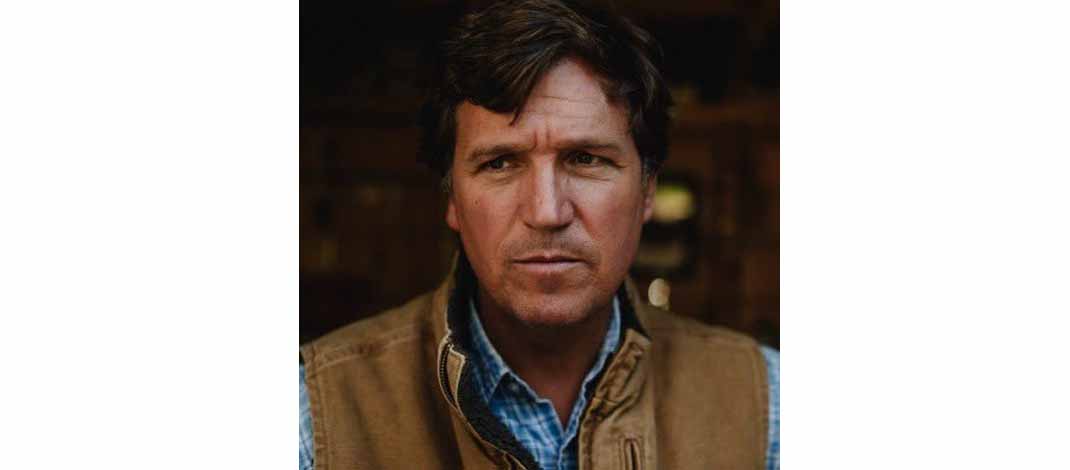
The American conservative commentator claims Israel’s Prime Minister Benjamin Netanyahu is pushing Washington towards a nuclear attack on Iran’s Pickaxe Mountain, while US Vice President JD Vance and envoy Steve Witkoff are reportedly favouring a diplomatic settlement. The allegations have not been independently verified.
New Delhi : American conservative political commentator and journalist Tucker Carlson has raised serious concerns over the possibility of a US nuclear strike against Iran, alleging that Israeli Prime Minister Benjamin Netanyahu is putting pressure on US President Donald Trump to authorise an attack on an underground Iranian nuclear facility.
In a lengthy post on his official X account, Carlson claimed that the Trump administration could be just days away from considering such an unprecedented military action, with Pickaxe Mountain in central Iran allegedly being the potential target. He said Israeli intelligence believes that Iran has restarted its nuclear enrichment programme at the underground site.
Carlson argued that the facility’s tunnels are reportedly protected by approximately 300 feet of solid granite, making them difficult to penetrate using conventional American weapons. On this basis, he claimed that a nuclear strike was being pushed as the only military option and alleged that Netanyahu was lobbying Washington aggressively to pursue the move.
Quoting an unnamed informed observer, Carlson wrote that Netanyahu calls Trump about the issue every day.
Netanyahu’s Political Position and Alleged Pressure on Washington
Carlson further alleged that Netanyahu is facing a difficult political situation following the latest election results in Israel. According to him, Netanyahu cannot form a government without securing the support of other political parties to reach the required majority of 61 seats in the Knesset.
He claimed that Netanyahu needs Trump’s direct political intervention to broker an agreement with other parties and secure his continuation as Prime Minister. Otherwise, Carlson suggested, Netanyahu could lose office and face investigations and possible legal consequences.
According to Carlson, this political uncertainty has made Netanyahu increasingly dependent on maintaining close relations with Trump, while renewed military confrontation with Iran could serve his political interests.
He also alleged that Netanyahu has been exerting maximum pressure on his closest allies within the Trump administration, including US Defence Secretary Pete Hegseth and US Central Command (CENTCOM) Commander Brad Cooper. Carlson claimed that both officials oppose a negotiated settlement and favour restarting major military operations against Iran.
He further named US Secretary of State Marco Rubio and CIA Director John Ratcliffe among those allegedly following Netanyahu’s position. Carlson also claimed that Democratic Party leaders were aligned with this approach and alleged that former US President Barack Obama had opposed the proposed Iran peace agreement during a recent meeting in Doha.
These assertions were presented by Carlson as his own account and have not been independently substantiated.
Gulf Nations Fear Economic and Environmental Consequences
Carlson said that several of America’s traditional allies in the Middle East are deeply concerned about the possibility of another major military escalation.
He claimed that on September 27, Netanyahu secretly travelled to Abu Dhabi to seek the United Arab Emirates’ support for his lobbying efforts aimed at launching a final military operation against Iran. However, according to Carlson, the UAE declined to support the proposal.
He warned that after eight months of conflict, Gulf economies are already under considerable pressure, while global energy and fertiliser markets have also suffered significant disruption. He argued that these sectors could take considerable time to recover.
Highlighting the vulnerability of international oil transportation, Carlson said that approximately 850 supertankers operate globally to transport oil from producing countries to international markets. He claimed that 11 such vessels were seriously damaged in the Strait of Hormuz during October alone.
According to him, continued disruption at this pace could trigger a severe global economic downturn, while a nuclear attack on Iran would dramatically worsen the situation.
He also warned about the potential environmental consequences of a nuclear explosion at Pickaxe Mountain, claiming that radioactive fallout from a ground-level explosion could contaminate the Persian Gulf and threaten the water supply of nearly 100 million people.
Warning of Wider Nuclear Escalation and World War III
Carlson cautioned that the consequences of a US nuclear attack on Iran would extend far beyond the Middle East and could fundamentally alter international security calculations.
He pointed out that the United States remains the only country to have used nuclear weapons in warfare and argued that an American nuclear strike against Iran could establish a dangerous precedent for other nuclear-armed nations.
He further claimed that Russia had communicated to at least two other governments that a US nuclear attack on Iran could provide justification for Moscow to use nuclear weapons against Ukraine.
Carlson also warned that such a development could increase nuclear risks between India and Pakistan, while potentially encouraging North Korea to consider similar action against Seoul.
In his assessment, the first use of a nuclear weapon in the current conflict could trigger a wider international confrontation, potentially leading to World War III, with catastrophic consequences for humanity.
US Nuclear Doctrine and November 7 Deadline
Carlson also raised concerns about what he described as changes in America’s nuclear policy. He alleged that since February, the Trump administration had quietly revised its nuclear doctrine to make the first use of so-called battlefield or tactical nuclear weapons easier.
He criticised political leaders in Washington, from both the Republican and Democratic parties, for allegedly failing to give sufficient attention to the risks associated with such a policy shift.
Referring to the immediate timeline, Carlson claimed that people closely monitoring the situation believe Trump could decide by November 7 whether to authorise the use of nuclear weapons against Iran.
However, he acknowledged that Trump appeared to be hesitating and was currently listening to Vice President JD Vance and his special envoy and close associate Steve Witkoff, both of whom, according to Carlson, believe that a diplomatic agreement with Iran remains achievable.
Diplomatic Settlement Still Possible, Says Carlson
Carlson acknowledged that negotiations with Iran would not be straightforward. He described Iranian political decision-making as complicated, particularly following the reported killing of Supreme Leader Ayatollah Ali Khamenei and members of his family in February.
He suggested that decades of international isolation had also contributed to differences in how Iranian leaders understand Western political and diplomatic decision-making.
Carlson further claimed that some Iranian decision-makers believe the US government exercises considerable influence over Israel.
Nevertheless, citing conversations with people who have reportedly interacted with Iranian decision-makers, he argued that there is a broad understanding within Iran that further military confrontation would be harmful to all sides and that a negotiated settlement is worth pursuing.
Carlson Calls for Global Public Opposition to Nuclear War
Concluding his lengthy post, Carlson argued that the international public has largely been excluded from discussions surrounding the possibility of a nuclear confrontation.
He said that hundreds of millions of people around the world, including future generations, could face devastating consequences if Washington were pushed towards a nuclear attack on Iran.
Calling for greater public engagement, Carlson urged people across the world to raise their voices against the possibility of nuclear escalation and to press political leaders to pursue diplomacy rather than another devastating war.