
New Delhi/Manesar, August 7: The International Centre for Automotive Technology (ICAT) has introduced a comprehensive framework to simplify the bus body type approval certification process under AIS-052, AIS-153 and AIS-119, while maintaining the highest standards of safety and quality.
The initiative, launched in line with the guidance of the Ministry of Road Transport and Highways (MoRTH), aims to make regulatory compliance easier and more efficient without diluting safety requirements or the intent of the Automotive Industry Standards.
 Following extensive consultations with industry stakeholders and detailed technical studies, ICAT has redesigned the certification process by eliminating duplication of engineering efforts, improving coordination, simplifying documentation and providing end-to-end technical support, while retaining all mandatory safety verification requirements.
The initiative is based on ICAT’s “ICAT-CONNECT” philosophy, under which the organisation functions not only as a testing and certification agency but also as a technical partner, assisting manufacturers in understanding regulations, preparing engineering documentation, developing compliant designs, optimising certification planning and securing approvals more efficiently.
Under the revised framework, collaborative engineering assessments will be permitted where multiple manufacturers use common designs, materials and structural configurations. While design reviews, engineering simulations and documentation may be carried out jointly, each manufacturer will continue to undergo individual vehicle verification and mandatory compliance assessment before certification, ensuring the integrity of the approval process.
ICAT has also introduced a two-phase certification system. Manufacturers can first obtain a Design Compliance Confirmation after verification of engineering drawings, structural calculations, 3D models and related documents, enabling fabrication to begin with greater confidence. Final certification will be granted only after successful physical verification of the completed vehicle against the approved design.
According to ICAT, the streamlined framework is expected to reduce certification timelines, minimise rework, improve predictability and simplify compliance for manufacturers, particularly Micro, Small and Medium Enterprises (MSMEs).
As a result of process optimisation and collaborative engineering, mandatory bus certification costs are expected to decline by nearly 50 per cent for manufacturers participating under the group-based certification model, while maintaining full compliance with national safety standards.
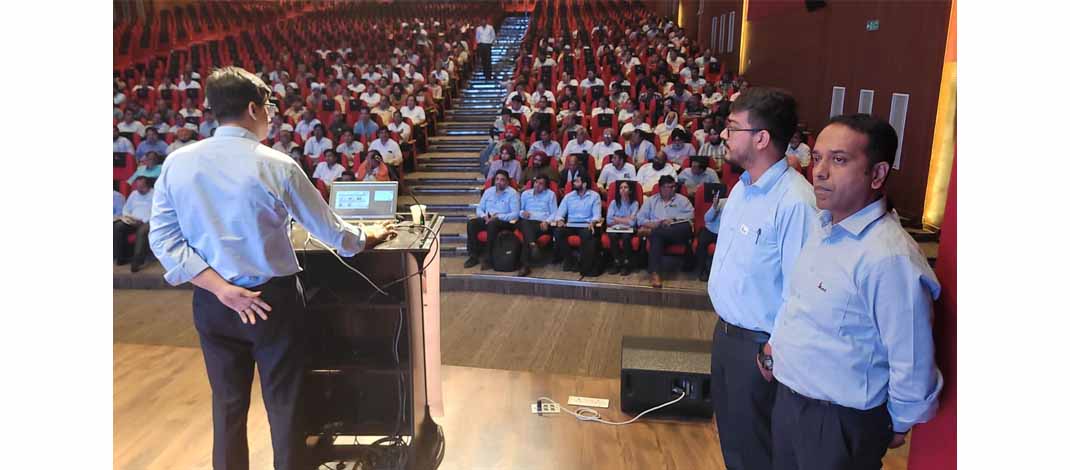
To familiarise industry stakeholders with the revised framework, ICAT organised an industry seminar at ICAT Centre-II, Manesar, on August 7, on the theme: “Optimization of Process and Cost for Type Approval Certification as per AIS-052, AIS-153 and Other Applicable Standards including AIS-119.”
ICAT’s Commitment to Support Government of India’s Vision : Saurabh Dalela
Speaking on the occasion, ICAT Director Saurabh Dalela said the objective is not to make safety standards easier, but to make the compliance assessment process simpler.
He emphasised that every requirement under AIS-052, AIS-153, AIS-119 and other applicable standards will continue to be verified with the same technical rigour. The simplification focuses on eliminating duplication, improving coordination and supporting manufacturers through engineering and documentation, in line with ICAT’s “I-CONNECT” philosophy.
The initiative reinforces ICAT’s commitment to supporting the Government of India’s vision of safer mobility, enhanced ease of doing business and stronger regulatory compliance, while ensuring that every certified bus continues to meet the highest standards of safety, quality and passenger protection.