
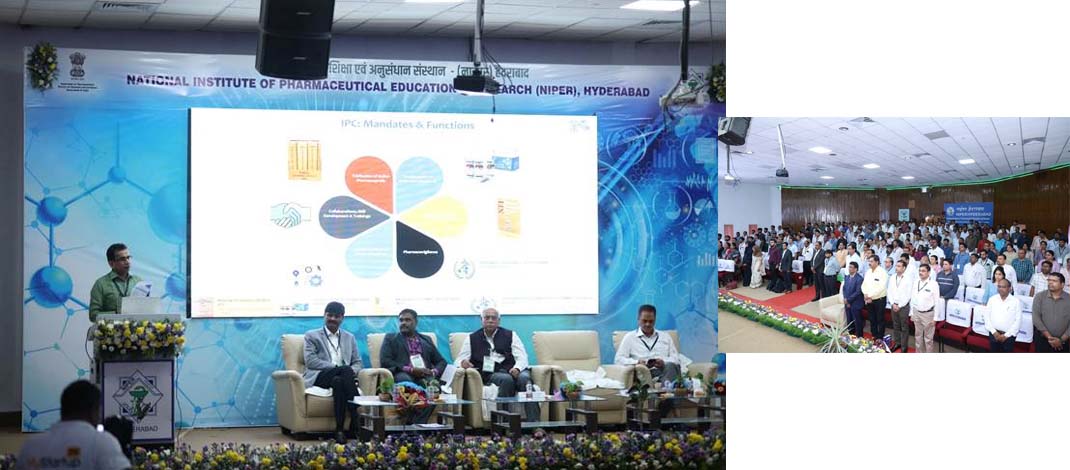
New Delhi : The Indian Pharmacopoeia Commission (IPC) organised a Scientific Conclave and Interactive Session on Indian Pharmacopoeia 2026 at the National Institute of Pharmaceutical Education and Research Hyderabad in Hyderabad on Thursday.
The event was organised in collaboration with Central Drugs Standard Control Organization (CDSCO), NIPER Hyderabad and the IDMA Telangana Chapter. The conclave focused on the theme “Significance of Indian Pharmacopoeia Reference Standards and Impurity Standards in Ensuring Pharmaceutical Quality.”
The conference aimed to highlight the importance of Indian Pharmacopoeia Reference Substances (IPRS) and impurity standards in maintaining the quality, safety and efficacy of medicines. IPC stated that pharmaceutical quality remains a critical component of public health protection and reaffirmed its continued efforts to strengthen medicine quality systems through scientific and regulatory initiatives.
The conclave was inaugurated by Shailendra Saraf, who appreciated IPC’s collaboration with academic institutions to promote pharmaceutical quality initiatives. He said such partnerships provide an important platform for scientific exchange and capacity building among regulators, academia and industry stakeholders.
Addressing the gathering, V. Kalaiselvan emphasised that impurity profiling and scientifically established pharmacopoeial standards are essential for reducing adverse effects linked to pharmaceutical impurities. He reiterated IPC’s commitment towards strengthening medicine quality systems and contributing to the vision of Viksit Bharat through robust quality assurance mechanisms.
The inaugural session was attended by senior officials from IPC, CDSCO, NIPER Hyderabad and representatives from the pharmaceutical industry. K. Narendran also addressed the conclave and highlighted the importance of harmonised standards and strong regulatory oversight in ensuring medicine quality.
A key highlight of the conclave was the participation of experts from both pharmaceutical quality and clinical domains. IPC stated that, for the first time, the platform brought together regulatory authorities, industry experts, analytical scientists and clinicians to discuss the clinical implications of pharmacopoeial impurities, including their possible link to adverse drug reactions and patient safety concerns.
The conclave also provided an opportunity for pharmaceutical companies involved in the development and implementation of IPRS and impurity standards to share their experiences and technical perspectives.
During the technical sessions, experts deliberated on issues related to pharmacopoeial standards, impurity control, regulatory compliance, pharmaceutical quality assurance, risk assessment approaches and emerging global challenges in impurity management and regulatory control.
The programme concluded with an interactive discussion involving experts from IPC, CDSCO, state licensing authorities, academia, clinicians, researchers and industry representatives on challenges related to pharmaceutical impurities, analytical methodologies and implementation of regulatory standards.
The conclave witnessed participation from regulators, pharmaceutical professionals, academicians, clinicians, researchers and analytical scientists from across the country, reaffirming IPC’s commitment to promoting public health protection through scientifically robust pharmacopoeial standards.