
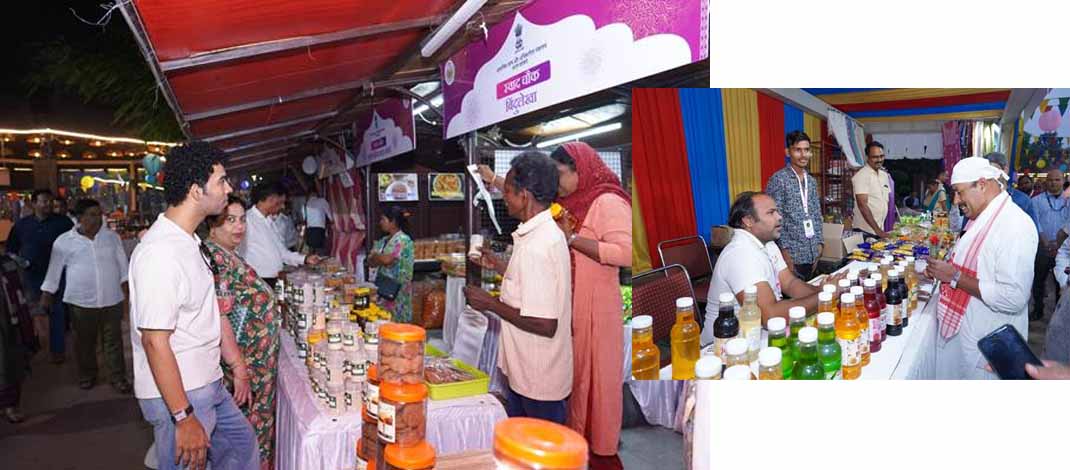
130-plus stalls at Dilli Haat bring together artisans and beneficiaries from disadvantaged communities; participating corporations record sales of ₹55.46 lakh in the first eight days
New Delhi : The Shilp Samagam Mela 2026, organised by the Ministry of Social Justice and Empowerment, Government of India, at Dilli Haat, INA, New Delhi, is providing a vibrant platform for artisans and beneficiaries from disadvantaged communities to showcase their craftsmanship, connect directly with consumers and explore new avenues for livelihood and entrepreneurship.
The 15-day exhibition, which will continue until November 15, brings together traditional handicrafts, handloom products, textiles, festive items, home décor, lamps and a wide variety of indigenous products under one roof. More than 130 stalls have been set up at the venue, giving visitors an opportunity to discover the diversity of India’s traditional skills while supporting artisans and entrepreneurs from beneficiary communities.
A platform for economic empowerment
The Mela is specifically aimed at creating market opportunities for beneficiaries belonging to Scheduled Castes (SCs), Other Backward Classes (OBCs), Safai Karamcharis and persons with disabilities.
Rather than limiting support to financial assistance, the initiative provides beneficiaries with an opportunity to directly present their products before consumers, understand market preferences, develop customer relationships and strengthen their entrepreneurial capabilities.
The Ministry has been organising Shilp Samagam Melas since 2022. Over the years, more than 1,000 artisans from Scheduled Caste, Other Backward Class and Safai Karamchari communities have benefited from opportunities to exhibit and market their products through these fairs.
The broader objective is to encourage self-employment, entrepreneurship and sustainable livelihood opportunities, while helping beneficiary communities gain greater economic independence.
Seven thematic zones give the Mela a distinctive identity
This year’s edition has been organised around the theme ‘प्रकाश और परंपरा – ज्योति से ज्योति जलाएँ’, bringing together India’s traditional craftsmanship, festive spirit and cultural diversity.
The Mela has been divided into seven distinct thematic zones:
- कला आँगन
- प्रकाश चौक
- पूजा पथ
- सजावट बाज़ार
- घराना
- स्वाद चौक
- मंच
Together, these zones offer visitors a wider experience extending beyond shopping. From traditional art and festive lighting to पूजा सामग्री, decorative products, home-related crafts, food and cultural performances, the exhibition presents different dimensions of India’s living cultural traditions.
₹55.46 lakh sales recorded in first eight days
The response from visitors has translated into encouraging business activity for the participating artisans.
The four corporations associated with the initiative — National Scheduled Castes Finance and Development Corporation (NSFDC), National Backward Classes Finance and Development Corporation (NBCFDC), National Safai Karamcharis Finance and Development Corporation (NSKFDC) and National Divyangjan Finance and Development Corporation (NDFDC) — have together recorded cumulative sales of approximately ₹55.46 lakh between November 1 and November 8, 2026.
The sales performance indicates growing consumer interest in the products displayed at the Mela and demonstrates the potential of such platforms to connect traditional artisans with a larger and more diverse customer base.
For many participating artisans, the exhibition provides more than immediate sales. Direct interaction with customers allows them to understand changing preferences, present the stories behind their products and explore possibilities for expanding their businesses beyond local markets.
Government support reduces barriers for artisans
To facilitate participation, the Ministry is providing a range of support measures to beneficiaries.
These include free stalls, travel expenses, daily allowances and transportation facilities for goods. Such assistance is particularly important for small artisans and entrepreneurs who may otherwise find it difficult to bear the cost of travelling to a major metropolitan market, transporting their products and setting up an exhibition stall.
By reducing these logistical and financial challenges, the initiative seeks to ensure that beneficiaries can focus on showcasing their skills and building market connections.
Traditional craftsmanship meets new-age markets
An important aspect of the Mela is its focus on connecting traditional artisans with emerging avenues of commerce.
Initiatives such as Bharat TULIP seek to help artisans gain access to e-commerce platforms and reach customers beyond physical exhibitions. This can provide traditional products with a larger market while allowing artisans to gradually adapt their businesses to changing consumer behaviour.
The Mela also includes Purple Fest, highlighting the creativity, talent and capabilities of persons with disabilities and promoting their participation in economic and entrepreneurial activities.
Together, these initiatives reinforce the larger objective of creating inclusive opportunities and equal access to markets.
Union Ministers and senior officials visit the exhibition
The exhibition has also attracted senior government dignitaries, including Union Minister for Social Justice and Empowerment Dr. Virendra Kumar; Union Minister of State for Social Justice and Empowerment Shri Ramdas Athawale; Union Minister of State for Consumer Affairs, Food and Public Distribution Smt. Nimuben Jayantibhai Bambhaniya; and Secretary, Ministry of Social Justice and Empowerment, Shri Sudhansh Pant.
During their visits, the dignitaries toured the different stalls, interacted with participating artisans and took note of the products being displayed.
Their interactions highlighted the importance of providing sustained market access and institutional support to artisans and entrepreneurs from disadvantaged communities.
Cultural performances add colour to the exhibition
The Manch has emerged as another major attraction of the Mela, with cultural programmes being organised every evening.
Artists and performing groups from different States are presenting folk dances, traditional music and regional art forms, creating a lively cultural environment at Dilli Haat.
The performances provide visitors with an opportunity to experience the country’s diverse cultural traditions at a single venue. At the same time, they create a platform for artists from different regions to present their traditions before audiences in the national capital.
The combination of handicrafts, traditional products, cuisine and performing arts has given the Mela a distinctly festive character.
Families and young visitors turn up in large numbers
The exhibition is drawing families, young visitors, citizens and shoppers, many of whom are exploring the stalls to discover traditional products and interact with the artisans who make them.
For visitors, the Mela offers an opportunity to purchase indigenous products while learning about the skills, traditions and communities behind them. For participating artisans, every customer interaction represents a potential new market connection.
The initiative therefore brings together craftsmanship and commerce, tradition and contemporary markets, and cultural expression and economic opportunity.
Supporting the vision of an inclusive and self-reliant India
The Shilp Samagam Mela 2026 represents an approach in which social empowerment is linked with economic participation, entrepreneurship and market access.
By giving artisans a platform to display their products, supporting their participation and connecting them with consumers and emerging sales channels, the initiative seeks to strengthen the foundations of sustainable self-employment.
As the Mela continues at Dilli Haat until November 15, visitors have the opportunity to experience India’s traditional crafts and cultural diversity while directly supporting artisans and entrepreneurs working towards greater economic independence.
The larger message of Shilp Samagam is clear: preserving India’s traditional skills is not only about safeguarding heritage; it is also about creating contemporary markets, expanding livelihoods and enabling artisans from disadvantaged communities to become stronger and more self-reliant participants in India’s growing economy.
